Saturday, July 07, 2012

Saint-Émilion - A World Heritage Site


Saint-Émilion is an ancient town going back to prehistoric times situated in south-west France east of Bordeaux. It is a World Heritage site, with fascinating Romanesque churches and ruins stretching all along steep and narrow streets.
The Romans planted vineyards in what was to become Saint-Émilion as early as the 2nd century. The town was named after the monk Émilion, a travelling confessor, who settled in a hermitage carved into the rock there in the 8th century. It was the monks who followed him that started up the commercial wine production in the area.
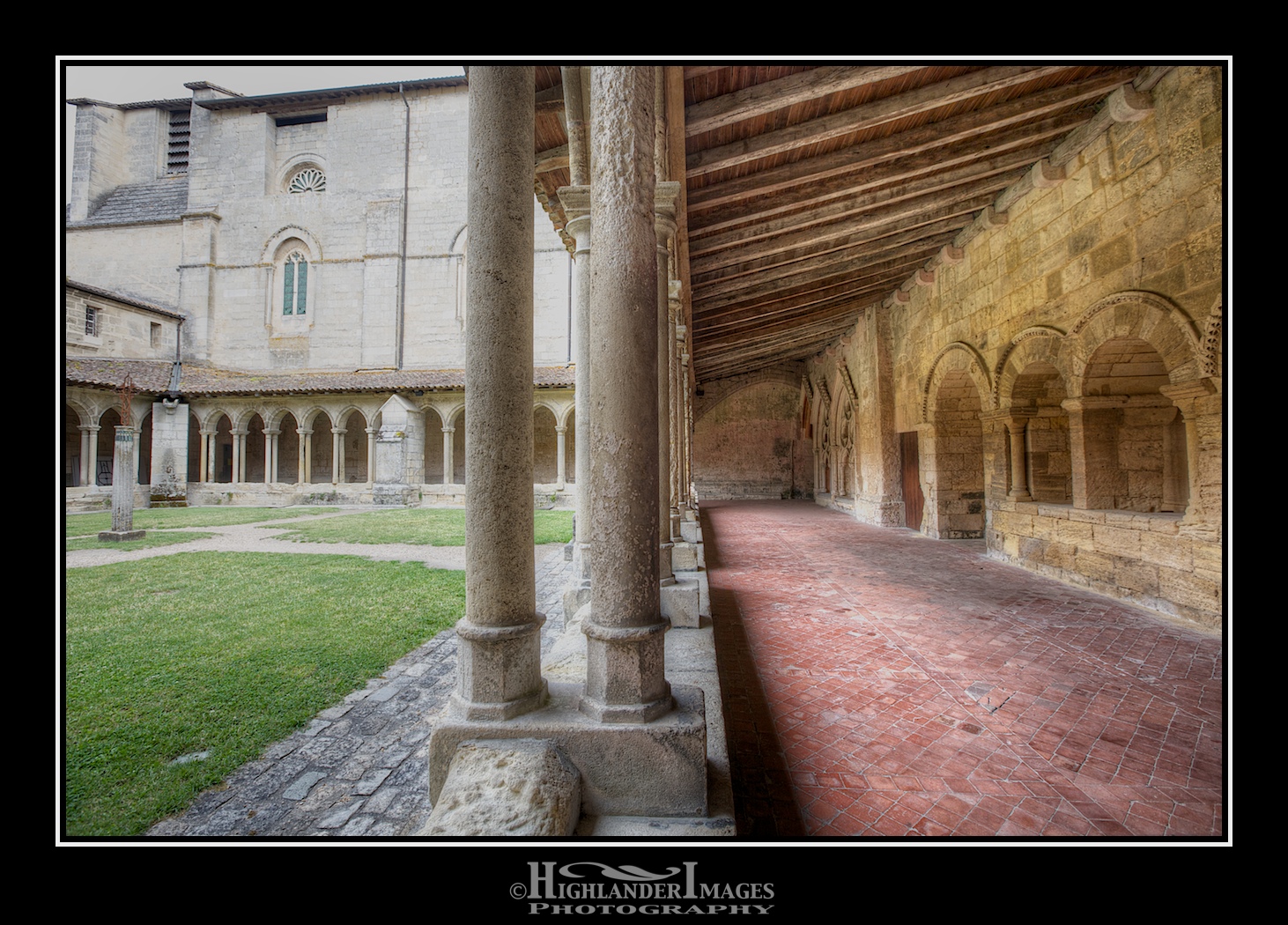
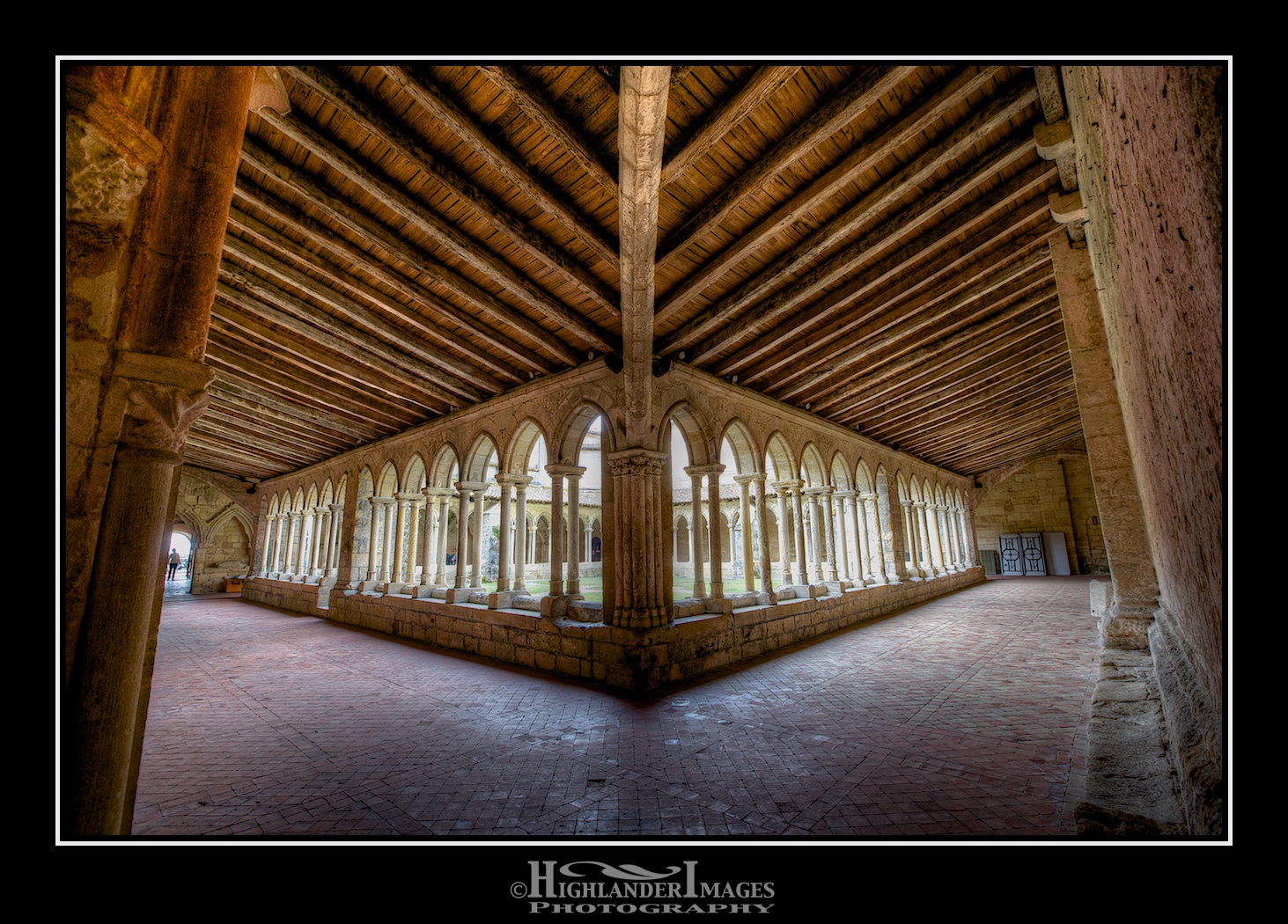


If you like wine and good food then what better place to visit than Saint-Émilion which seems to be full of wine shops and restaurants. Saint-Émilion is one of the principal red wine areas of Bordeaux along with the Médoc, Graves and Pomerol. The region is much smaller than the Médoc and adjoins Pomerol. As in Pomerol and the other appellations on the right bank of the Gironde, the primary grape varieties used are the Merlot and Cabernet Franc, with relatively small amounts of Cabernet Sauvignon also being used by some chateaux.
Château Ausone and Château Cheval Blanc are the only two wines currently classified as Premiers grands crus classes A (First Great Growths category A). There are then 13 Premiers grands crus classés B and 53 grands crus classés. In addition, a large number of vineyards are classified as grand cru.


Historically there is a lot to see in Saint-Émilion from the cloisters of an abandoned monastery next to the tourist office through the winding, steep, cobbled streets with fascinating architecture to the underground catacombs of the monolithic church. 


Tuesday, July 03, 2012

The Great Dunes of Pyla


I have seen some magnificent and beautiful sand dunes in my home country of Scotland, far up in the north west, and I have also seen and driven through large extensive sand dunes in the Empty Quarter between UAE and Saudi Arabia. So recently when visiting the Bordeaux area in France and someone suggested we visit the Great Dunes of Pyla, situated on the south side of Arcachon Bay close to the town of Arcachon, I was not expecting very much.


However the Dunes of Pyla (or Pilat) were very impressive and well worth the visit. These are the largest sand dunes in Europe reaching a height of 108m and stretching some 50m wide by 2.7km long. The dunes are moving landward at a rate of around 5m or more a year engulfing the local pine forest as well as roads and houses as they move. 


The dunes are easily accessible from a road south of Arcachon with ample car parking and a path leading through the pines to the base of the sand mound. A set of plastic steps has even been installed to help those visitors to climb to the top of the ridge with relative ease. A walk along the top ridge gives you a commanding view over Arcachon Bay and the Cap Ferrret peninsula as well as over the large pine forest on the landward side. The spot is a popular tourist destination for walkers as well as the more adventurous paragliders. 


Saturday, June 23, 2012

The Long & Winding Road to The Lakes


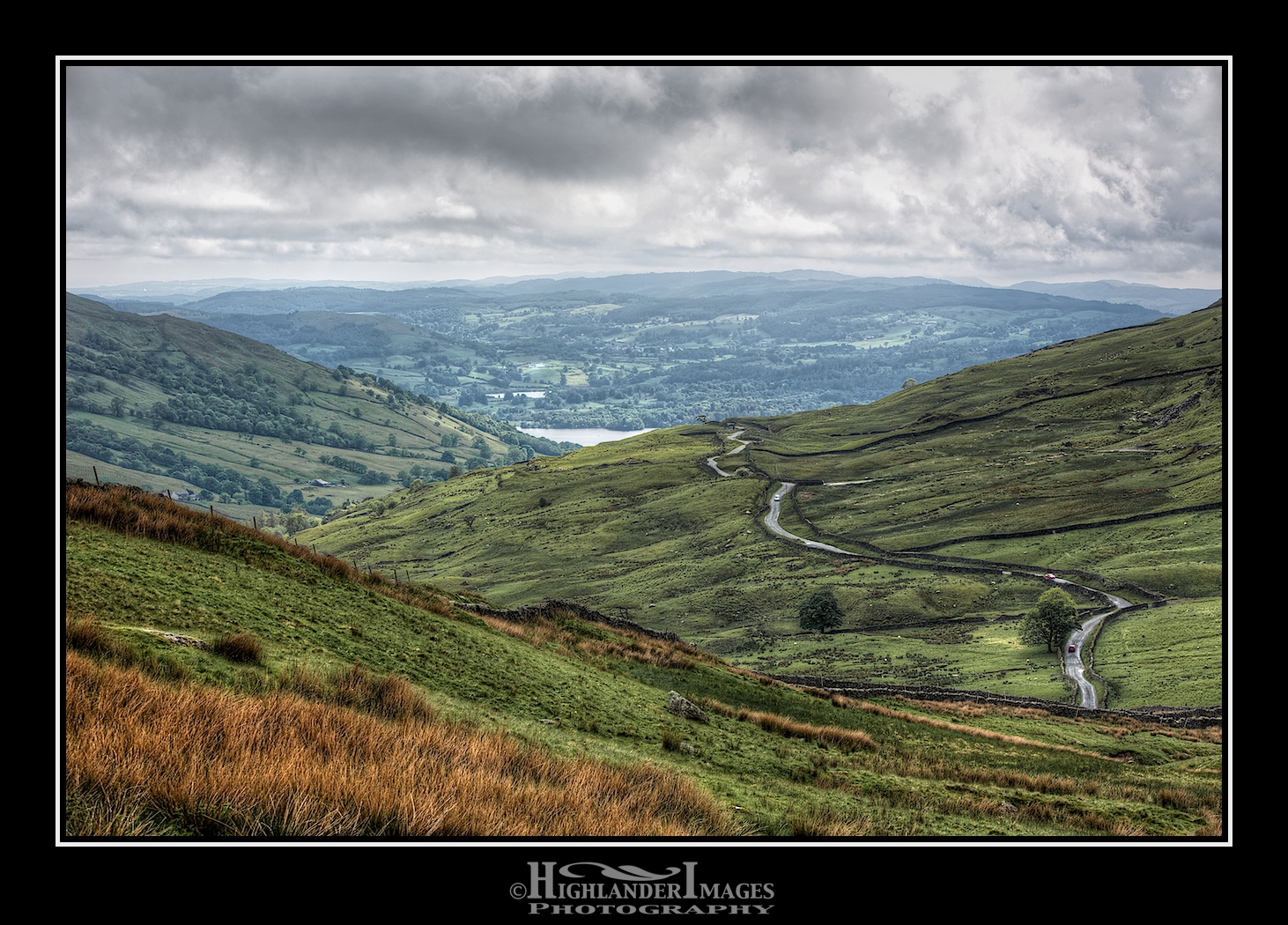
This is the undulating and winding road from that runs down from the Kirkstone Pass to Ambleside in the Lake District.

The Lake District, or The Lakes, is a mountainous region in Cumbria, North West England and is a popular holiday destination in UK. The majority of the area was designated as the Lake District National Park in 1951. It is the largest of the thirteen National Parks in England and Wales, and the second largest in the UK (after the Cairngorms). It lies entirely within the modern county of Cumbria, shared historically by the counties of Cumberland, Westmorland and Lancashire. All the land in England higher than three thousand feet above sea level lies within the National Park, including Scafell Pike, the highest mountain in England. It also contains the deepest and longest lakes in England, Wastwater and Windermere, respectively.


Thirlmere


Only one of the lakes in the Lake District is called by that name, Bassenthwaite Lake. All the others such as Windermere, Coniston Water, Ullswater and Buttermere are meres, tarns and waters, with mere being the least common and water being the most common. The major lakes and reservoirs in the National Park are given below.
  • Bassenthwaite Lake
  • Brotherswater
  • Buttermere
  • Coniston Water
  • Crummock Water
  • Derwent Water
  • Devoke Water
  • Elter Water
  • Ennerdale Water
  • Esthwaite Water
  • Grasmere
  • Haweswater Reservoir
  • Hayeswater
  • Loweswater
  • Rydal Water
  • Thirlmere
  • Ullswater
  • Wast Water
  • Windermere


Buttermere


Conniston Water


Steamer on Ullswater


Windermere


Thursday, May 17, 2012

Emperor Jade Pagoda, Ho Chi Minh, Vietnam


On the recommendation of Peter Stuckings, fellow photographer based in Ho Chi Minh City, Vietnam, I visited the Emperor Jade Pagoda for a quick photo shoot. The Emperor Jade Pagoda (Chùa Ngọc) is a Taoist Pagoda located at 73 Mai Thi Luu Street, District 3, Ho Chi Minh City, Vietnam. It is also known as the Tortoise Pagoda due no doubt to the large number of tortoises in a pool in front if the temple.


My timing was perfect as on arrival there was a ceremony going on with the head priest leading a procession of followers dressed in black. The chanting, drums and burning incense really added atmosphere to my visit. The highlight was when the overhead sun came out and created these wonderful beams of light through the overhead slatted roof beams cutting through the haze of smoke from the burning incense.

The temple was very authentic and was obviously well used on a daily basis by local worshippers. The ancient old fans hanging from the ceiling made the place look like a set from Indiana Jones and the Temple of Doom.


Sunday, May 06, 2012

Tyler Stableford - Adventure Photographer


Tyler Stableford was in Malaysia today to present a seminar as part of the Canon's EOS Master Craftsmen Southeast Asia Tour 2012. His presentation was very inspiring and showed Tyler's skills in both photography and cinema-photography in a number of adventurous situations. Much of this recent work was shot with the new Canon EOS 1D X and 5D Mk III cameras and used the latest wireless Speedlight 600 EX-RT flash units with the ST-E3-RT transmitter. These situations also displayed the durability and ruggedness of the Canon equipment which was used in some severe weather situations and arduous environments. As well as displaying his work he presented a live shooting demo with one of Malaysia's national cycle team highlighting his approach to making a shoot and using an array of Canon Speedlight 600 EX-RT flash units to enhance the lighting of the shot.


About Tyler Stableford

Aspen photographer and director Tyler Stableford has earned an international clientele for his commercial and editorial work. His clients include Disney, Patagonia, Stetson and The New York Times, among others.


Men's Journal named Tyler one of the seven "World's Greatest Adventure Photographers". He is one of Canon's distinguished Explorers of Light, as well an ambassador for the SanDisk Extreme Team and Adobe's digital imaging software.


Tyler's work has won numerous awards from Communication Arts, Photo District News, American Photography, the International Photography Awards, National Geographic Traveler, and more. His short film "The Fall Line" won the Official Best of Fest competition for "Award-Winning Films To Inspire."

Tyler is a graduate of Dartmouth College. His passion for photography extends beyond commercial work: He volunteers to shoot at least one week per year for nonprofits, and is an active member of the environmental-business organization "1% For The Planet".


You can check out his work at www.tylerstableford.com


Tuesday, May 01, 2012

Abandoned & Decayed - An HDR/URBEX Paradise


Decaying and abandoned old buildings are a treasure trove for the photographer or the urban explorer (URBEX) and these types of environments just shout out for the use of HDR and other post-processing styleization techniques to produce a moody and atmospheric image. The inside of these buildings are normally very dark and where there is bright light spilling in from the outside you can get large changes in dynamic range which can be limiting for most camera sensors. Hence the need for taking multiple bracketed images over a range of exposures to bring out the details in the shadows and properly expose the washed out highlights.

The above image, taken inside an old abandoned colonial house in Georgetown, Penang, Malaysia, was created by tone-mapping 3 bracketed images as shown below.

0 EV
-2 EV
+2 EV
For dynamic ranges like this where there is a large difference between the dark shadows and the bright highlights of the open doors and windows I would normally have taken more brackets; 5 or even 7 to cover the dynamic range of the scene. However in this case I was taking hand held as I was sans tripod so shot off 3 quick brackets to try and miminise any camera movement.

The images were imported into Aperture and then tone mapped using PhotoMatixPro. I subsequently did some additional post-processing in  Viveza 2 from Nik Software to enhance the colour and texture of some areas such as the wall on the left hand side and the wonderful eroded ceiling beams.

Looking at the final image compared with the "normal" 0 EV photo it really highlights the benefits of HDR techniques to bring out the full dynamic range of the scene.