Showing posts with label France. Show all posts
Saturday, July 21, 2012
Dinosaurs in Paris
The Gallery of Palaeontology and Comparative Anatomy is a part of the French National Museum of Natural History and is situated in the Jardin des Plantes in Paris near the Gare d'Austerlitz.
The Gallery was inaugurated in 1898 as part of l' Expositions universelles de Paris of 1900 and was the creation of professors Albert Gaudry (Professor of Paleontology) and Georges Pouchet (Professor of Comparative Anatomy) who wished to preserve and present to the public collections of great historic and scientific importance. The collections derive from the great expeditions of the traveller-naturalists of the 18th and 19th centuries as well as from the ménagerie' (zoo) of the Jardin des Plantes.
The Gallery of Comparative Anatomy, holds nearly a thousand skeletons and interprets their organization and classification. The remarkable Gallery building, designed by the architect Frederic Dutert consists of two floors and its surface area is approximately 2,500 square meters. The largest gallery, made of stone and metal, is almost 80 meters long, the facades are decorated with sculptures inspired by naturalists and large windows afford abundant natural light.
Labels:
anatomy,
animals,
bones,
dinosaur,
France,
gallery,
invertebrates,
Jardin des Plantes,
naturalist,
paleontology,
Paris,
skeleton
Tuesday, July 17, 2012
Père Lachaise Cemetery
Père Lachaise Cemetery is the largest cemetery in the city of Paris, France (44 hectares (110 acres) though there are larger cemeteries in the city's suburbs. Père Lachaise is in the 20th arrondissement, and is reputed to be the world's most visited cemetery, attracting hundreds of thousands of visitors annually to the graves of those who have enhanced French life over the past 200 years. It is also the site of three World War I memorials.
The cemetery is on Boulevard de Ménilmontant. The Paris Métro station Philippe Auguste on line 2 is next to the main entrance, while the station called Père Lachaise, on both lines 2 and 3, is 500 metres away near a side entrance. Many tourists prefer the Gambetta station on line 3, as it allows them to enter near the tomb of Oscar Wilde and then walk downhill to visit the rest of the cemetery.
Père Lachaise is still an operating cemetery and accepting new burials. However, the rules to be buried in a Paris cemetery are rather strict: people may be buried in one of these cemeteries if they die in the French capital city or if they lived there. Being buried in Père Lachaise is even more difficult nowadays as there is a waiting list: very few plots are available. The gravesites at Père Lachaise range from a simple, unadorned headstone to towering monuments and even elaborate mini chapels dedicated to the memory of a well-known person or family. A lot of the tombs are about the size and shape of a phone booth, with just enough space for a mourner to step inside, kneel to say a prayer, and leave some flowers.
Oscar Wilde's Grave
Edith Piaf's Grave

Jim Morrison's Grave

Dedications to Jim Morrison on a tree next to his grave
The cemetery manages to squeeze an increasing number of bodies into a finite and already crowded space. One way it does this is by combining the remains of multiple family members in the same grave. At Père Lachaise, it is not uncommon to reopen a grave after a body has decomposed and inter another coffin. Some family mausoleums or multi-family tombs contain dozens of bodies, often in several separate but contiguous graves. Shelves are usually fitted out to accommodate them.
Tribute to Flight AF447
In relatively recent times, Père Lachaise has adopted a standard practice of issuing 30-year leases on gravesites, so that if a lease is not renewed by the family, the remains can be removed, space made for a new grave, and the overall deterioration of the cemetery minimized. Abandoned remains are boxed, tagged and moved to Aux Morts ossuary, in Père Lachaise cemetery. Plots can be bought in perpetuity, for 50, 30 or 10 years, the last being the least expensive option. Even in the case of mausoleums and chapels, coffins are most of the time below ground.
There are a large number of famous people buried at Père Lachaise cemetery including Oscar Wilde, Edith Piaf, Stephane Grappelli, Marcel Marceau, Jim Morrison, Michel Petrucciani and Gioachino Rossini.
Tuesday, July 10, 2012
La Citadelle de Blaye.
On the right bank of the Gironde Estuary 56km north of Bordeaux lies the old Citadelle de Blaye which historically guarded the main entry point to Bordeaux.
In ancient times Blaye (Blavia) was a port of the Santones. Tradition states that the Frankish hero Roland was buried in its basilica, which was on the site of the citadel. It was early an important stronghold which played an important part in the wars against the English (who burnt it in 1352) and the French Wars of Religion (when it was the site of a Spanish naval victory in 1593). The duchess of Berry was imprisoned in its fortress in 1832-1833.
The town was formerly named Blaye-et-Sainte-Luce and was renamed Blaye in June 1961.
The town has a citadel built by Vauban on a rock beside the river, and embracing in its ancient ruins of an old Gothic château. The latter contains the tomb of Charibert II, king of Aquitaine, and son of Clotaire II. Blaye is also defended by the Fort Paté on an island in the river and the Fort Médoc on its left bank, both of the 17th century.
The citadel of Blaye, its city walls, the Fort Paté and the Fort Médoc (the latter in nearby Cussac-Fort-Médoc) were listed in 2008 as UNESCO World Heritage Sites, as part of the "Fortifications of Vauban" group.
Labels:
Blavia,
Blaye,
Blaye-et-Sainte-Luce,
Bordeaux,
citadelle,
fort,
fort medoc,
fort pate,
France,
Gironde,
historical,
UNESCO,
vauban,
world heritage
Saturday, July 07, 2012
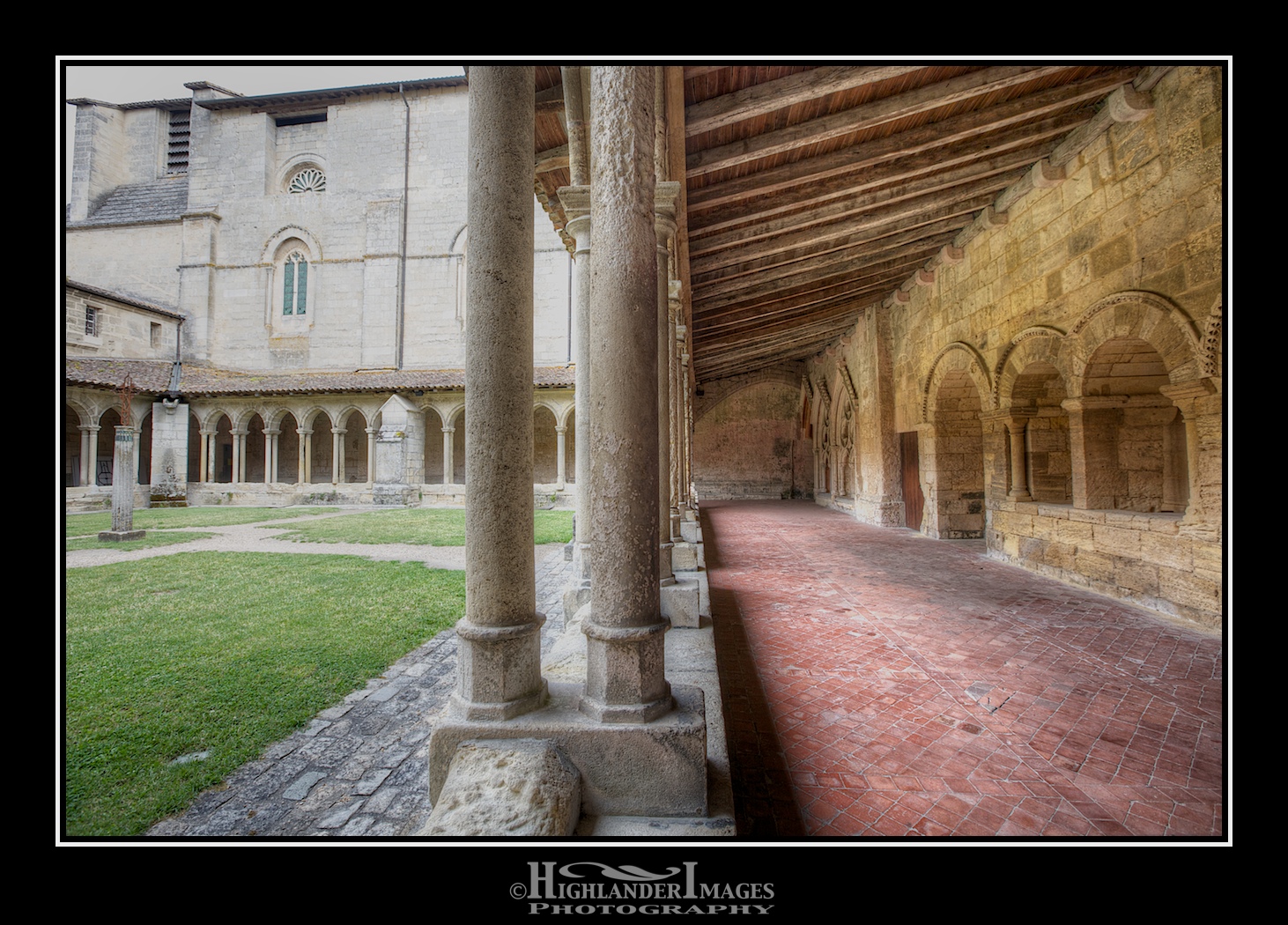
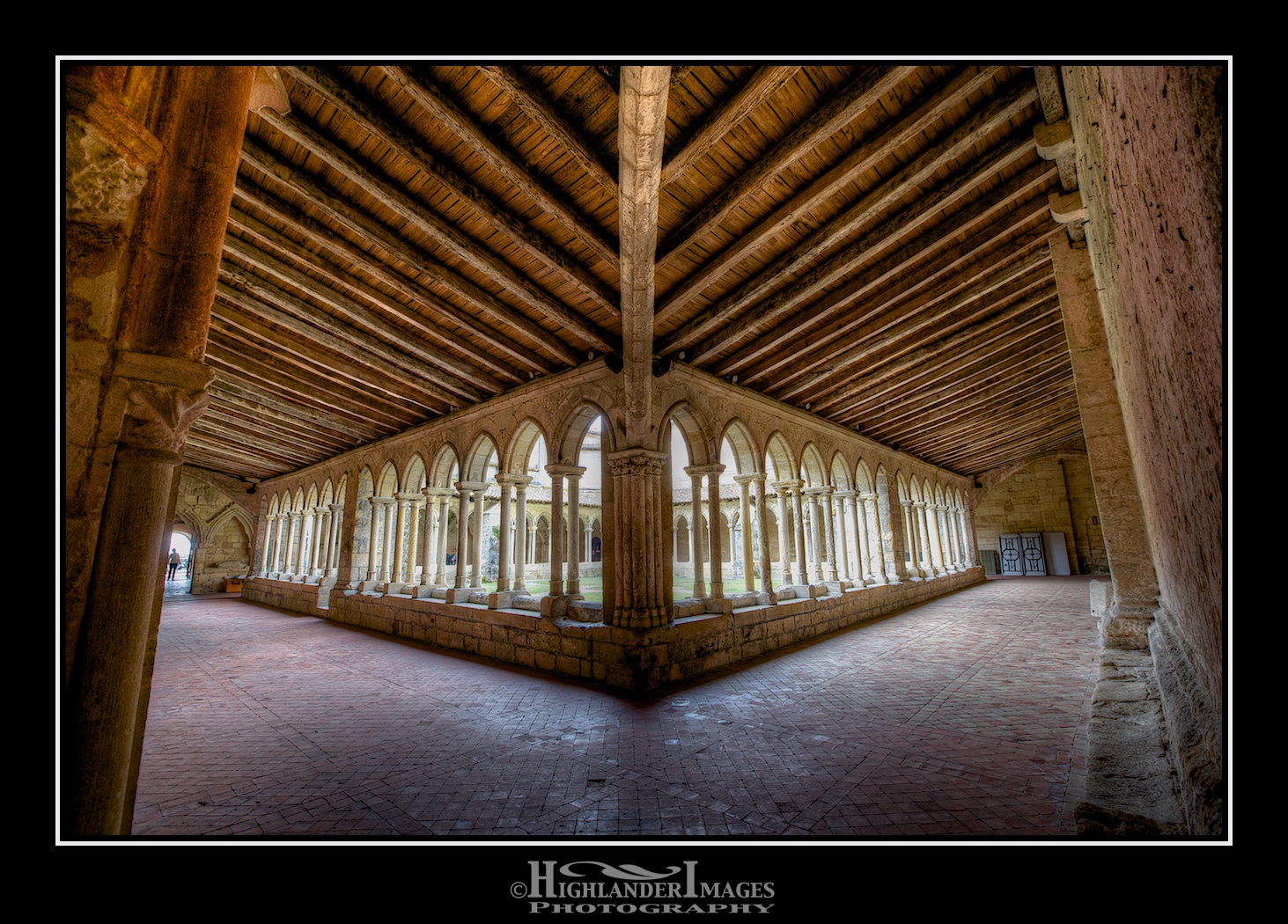
Saint-Émilion - A World Heritage Site
Saint-Émilion is an ancient town going back to prehistoric times situated in south-west France east of Bordeaux. It is a World Heritage site, with fascinating Romanesque churches and ruins stretching all along steep and narrow streets.
The Romans planted vineyards in what was to become Saint-Émilion as early as the 2nd century. The town was named after the monk Émilion, a travelling confessor, who settled in a hermitage carved into the rock there in the 8th century. It was the monks who followed him that started up the commercial wine production in the area.
If you like wine and good food then what better place to visit than Saint-Émilion which seems to be full of wine shops and restaurants. Saint-Émilion is one of the principal red wine areas of Bordeaux along with the Médoc, Graves and Pomerol. The region is much smaller than the Médoc and adjoins Pomerol. As in Pomerol and the other appellations on the right bank of the Gironde, the primary grape varieties used are the Merlot and Cabernet Franc, with relatively small amounts of Cabernet Sauvignon also being used by some chateaux.
Labels:
Cabernet Franc,
Cabernet Sauvignon,
catacombs,
chateaux,
France,
Gironde,
grand cru,
Graves,
hermitage,
Medoc,
Merlot,
monastery,
monks,
monolithic,
Pomerol,
Roman,
Saint-Émilion,
wine,
world heritage
Tuesday, July 03, 2012
The Great Dunes of Pyla
I have seen some magnificent and beautiful sand dunes in my home country of Scotland, far up in the north west, and I have also seen and driven through large extensive sand dunes in the Empty Quarter between UAE and Saudi Arabia. So recently when visiting the Bordeaux area in France and someone suggested we visit the Great Dunes of Pyla, situated on the south side of Arcachon Bay close to the town of Arcachon, I was not expecting very much.
However the Dunes of Pyla (or Pilat) were very impressive and well worth the visit. These are the largest sand dunes in Europe reaching a height of 108m and stretching some 50m wide by 2.7km long. The dunes are moving landward at a rate of around 5m or more a year engulfing the local pine forest as well as roads and houses as they move.
The dunes are easily accessible from a road south of Arcachon with ample car parking and a path leading through the pines to the base of the sand mound. A set of plastic steps has even been installed to help those visitors to climb to the top of the ridge with relative ease. A walk along the top ridge gives you a commanding view over Arcachon Bay and the Cap Ferrret peninsula as well as over the large pine forest on the landward side. The spot is a popular tourist destination for walkers as well as the more adventurous paragliders.
Subscribe to:
Posts (Atom)