Showing posts with label grand cru. Show all posts

Friday, July 13, 2012

Bordeaux Chateaux.


Think of Bordeaux and you immediately think of wine. Bordeaux sits on the Garonne River in south west France and is surrounded by some of France's most famous vineyards. 
Bordeaux is the world's major wine industry capital. It is home to the world's main wine fair, Vinexpo, while the wine economy in the metro area moves 14.5 billion euros each year. Bordeaux wine has been produced in the region since the 8th century. The historic part of the city is on the UNESCO World Heritage List as "an outstanding urban and architectural ensemble" of the 18th century.


Bordeaux has about 116,160 hectares (287,000 acres) of vineyards, 57 appellations, 10,000 wine-producing châteaux and 13,000 grape growers. With an annual production of approximately 960 million bottles, Bordeaux produces large quantities of everyday wine as well as some of the most expensive wines in the world. Included among the latter are the area's five premier cru (first growth) red wines (four from Médoc and one, Château Haut-Brion, from Graves), established by the Bordeaux Wine Official Classification of 1855: The first growths are:

  • Château Lafite-Rothschild
  • Château Margaux
  • Château Latour
  • Château Haut-Brion
  • Château Mouton-Rothschild*
*In 1855 Mouton-Rothschild was ranked a Second Growth. In 1973, it was elevated to First Growth status.


Both red and white wines are made in Bordeaux. Red Bordeaux is called claret in the United Kingdom. Red wines are generally made from a blend of grapes, and may be made from Cabernet Sauvignon, Merlot, Cabernet Franc, Petit verdot, Malbec, and, less commonly in recent years, Carménère. White Bordeaux is made from Sauvignon blanc, Sémillon, and Muscadelle. Sauternes is a subregion of Graves known for its intensely sweet, white, dessert wines such as Château d'Yquem.


Saturday, July 07, 2012

Saint-Émilion - A World Heritage Site


Saint-Émilion is an ancient town going back to prehistoric times situated in south-west France east of Bordeaux. It is a World Heritage site, with fascinating Romanesque churches and ruins stretching all along steep and narrow streets.
The Romans planted vineyards in what was to become Saint-Émilion as early as the 2nd century. The town was named after the monk Émilion, a travelling confessor, who settled in a hermitage carved into the rock there in the 8th century. It was the monks who followed him that started up the commercial wine production in the area.


If you like wine and good food then what better place to visit than Saint-Émilion which seems to be full of wine shops and restaurants. Saint-Émilion is one of the principal red wine areas of Bordeaux along with the Médoc, Graves and Pomerol. The region is much smaller than the Médoc and adjoins Pomerol. As in Pomerol and the other appellations on the right bank of the Gironde, the primary grape varieties used are the Merlot and Cabernet Franc, with relatively small amounts of Cabernet Sauvignon also being used by some chateaux.
Château Ausone and Château Cheval Blanc are the only two wines currently classified as Premiers grands crus classes A (First Great Growths category A). There are then 13 Premiers grands crus classés B and 53 grands crus classés. In addition, a large number of vineyards are classified as grand cru.


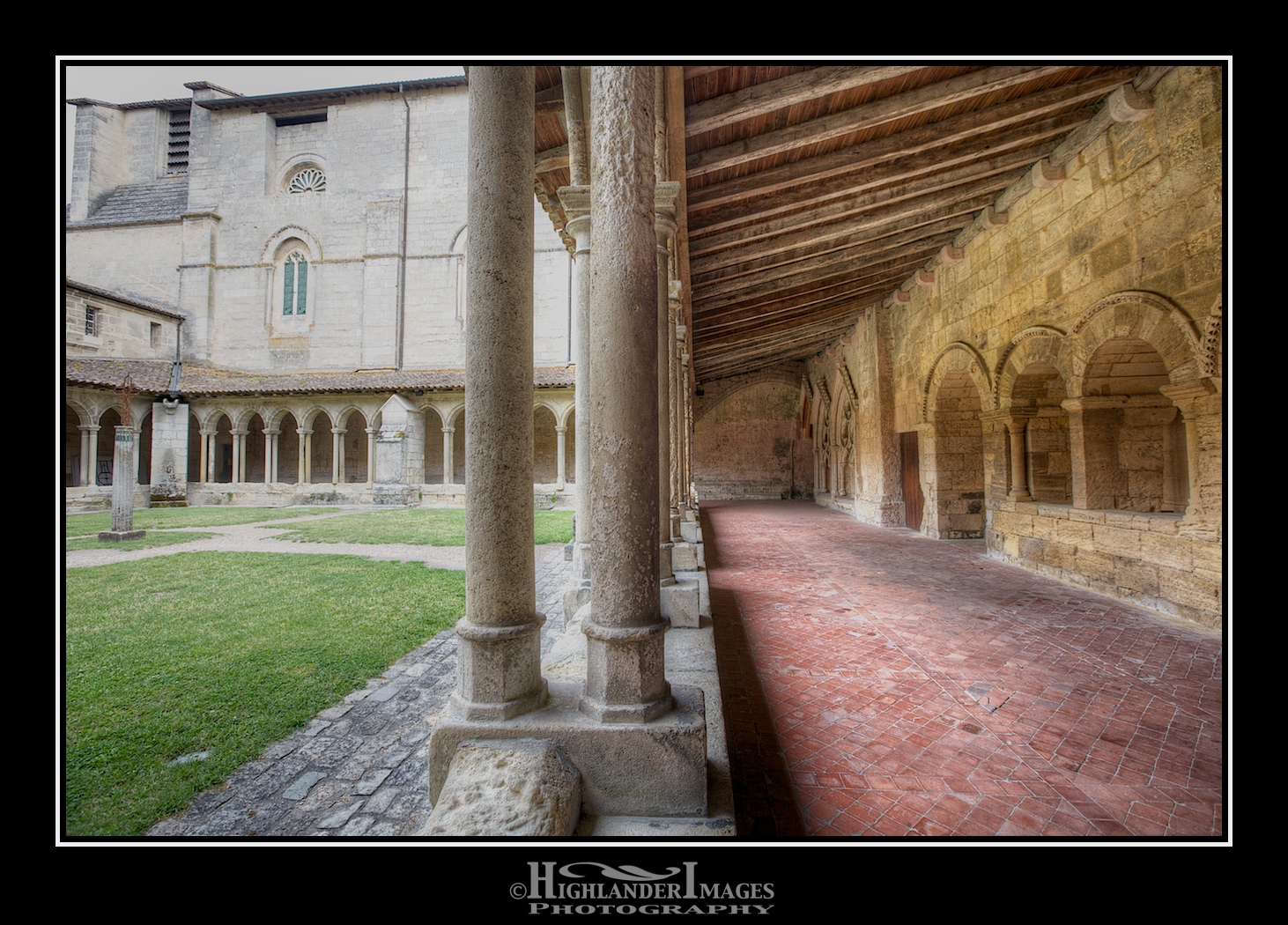
Historically there is a lot to see in Saint-Émilion from the cloisters of an abandoned monastery next to the tourist office through the winding, steep, cobbled streets with fascinating architecture to the underground catacombs of the monolithic church.