Monday, February 28, 2011

El Quinto Pino


El Quinto Pino is a small tapas bar in San Sebastian, North Spain. Apparently there is an El Quinto Pino restaraunt in New York but I'm not sure if they are affiliated. The meaning of el quinto pino is "To live far away from anything,usually some place rural".

Sunday, February 27, 2011

SilverEfexPro 2 - Initial Review


I have been using SilverEfexPro now for some time and have been very impressed by it's capabilities and performance so when Nik Software announced they were releasing SilverEfexPro 2 I was on their pre-order waiting list immediately. It was released just a few days ago and I have done some initial tests of the new features which are summarised below:
  1. Intuitive History Browser
  2. Structure and Fine Structure
  3. Soft Contrast
  4. GPU Processing
  5. Dynamic Brightness
  6. Natural Image Borders
  7. Specially Developed Algorithms
  8. Amplify Black and Whites
  9. Selective Colour
The above image, which is another early morning photo taken at Putrajaya, was really a quick test image where I tried out some of the new features including the very useful selective colour feature. I was pleased with the added control on tonality and structure and the border feature is a welcome addition for finishing your print. The interface seems a little quicker, probably due to the multi-threaded, 64 bit GPU processing. Check out all of SilverEfexPro 2 features here and you can always download a trial version for 15 days to test it out. It probably ranks as one of the best if not the best black & white processing software and one which is firmly embedded in my workflow. I use it as a plugin to Aperture so it really is very easy to export to the application and then save the finished black & white image without leaving Aperture.

For comparison the original image is below.


Seri Wawasan Bridge


The Seri Wawasan Bridge is one of the main bridges in Putrajaya, the Malaysian federal administrative capital. This futuristic cable-stayed bridge which has a sail ship appearance, connects Precinct 2 on the Core Island to the residential area of Precinct 8.
The concrete bridge is a combination of cable backstays and structural steel tie back. It is a dual three lane carriageways of 18.6m width each, comprising 3 x 3.5m width lanes, 0.5 m hard shoulder, 0.5m marginal strip. The median is 4 m wide and walkway cum cycle track width is 5.1m giving a total width of 37.2m at the centre of the bridge.

Behind the bridge you can see the Putra Mosque, or Masjid Putra in Malay language, which is the principal mosque of Putrajaya, Malaysia. Construction of the mosque began in 1997 and was completed two years later. It is located next to Perdana Putra which houses the Malaysian Prime Minister's office and man-made Putrajaya Lake. In front of the mosque is a large square with flagpoles flying Malaysian states' flags.

Saturday, February 26, 2011

West Lake Floating Restaurant


This beautiful floating restaurant is on West Lake in Hangzhou, China. West Lake seems to be a very popular name for Chinese restaurants - I used to go to one in Singapore many years ago. It was only when I eventually visited Hangzhou that I realised the name comes from the famous West lake that is there. 

Friday, February 25, 2011

Casa Batllo


This is the blue tiled stairwell in the famous Casa Batllo designed by Antoni Gaudi in Barcelona, Spain. You will note that there is hardly a straight line in this building with windows, doors, railings all having curves. An earlier post on this blog entitled House of Bones describes this building in more detail.

Thursday, February 24, 2011

The Highlander


This small bar sits in side street in Paris right next to the River Seine on the Saint Germaine side and as I walked past the Scottish flag caught my eye first .... and then the name. 
It's probably a good time here to explain the name of my website and my blog which of course is why this bar in Paris attracted my attention (as well as being a bar .... and being a Scottish one of course!).
A few years ago .... ok many years ago ..... my wife bought me a wonderful Birthday present of a bar - a beautiful rosewood bar, hand made in Melaka, Malaysia. This bar became the centre piece of our living room and was of course a focal point for many social occasions in our home. We moved to Dubai for about 4 years and of course the bar was duly packed up and again took pride of place in our Dubai home. Many parties and unplanned gatherings took place at my bar, which because of my ancestry, became know casually as "The Highlander Bar". One Christmas we hosted a lunch and of of my good friends gave me a present of an engraved bar sign as you can see below .....
We now had an official name for my bar and the sign was quickly erected over the bar. Shortly thereafter I did some googling on "Highlander Bar" and found that there was a bar in Gran Canaria island, Spain which was called the Highlander Bar and which had the domain name www.highlanderbar.com. However the domain name www.thehighlanderbar.com was free so I bought this and set up my first website for my little bar.
Not stopping there I then used this theme to name my photography website, www.highlanderimages.com and my blog, www.highlanderimages.blogspot.com. Fairly recently I also managed to buy the www.highlander.bar domain as it had become available, I presume the bar in Gran Canaria had gone belly up.

Wednesday, February 23, 2011

Tricky Ricky Cinema


What goes on at the Ricky Cinema House of Pleasure in Colombo can only be left to your fertile imagination but my guess is that the Adults Only subtitle gives it away. It would have been tempting to drop in just to check out the Sri Lankan adult film industry but luckily for you (and me) I passed up the opportunity. I'm sure a white guy with a Canon camera would have not been that welcome anyway!

Tuesday, February 22, 2011

KL Railway Station


Kuala Lumpur Railway Station (Malay: Stesen Keretapi Kuala Lumpur) is a train station located in Kuala Lumpur, Malaysia. Completed in 1910 to replace an older station on the same site, the station was Kuala Lumpur's railway hub in the city for the Federated Malay States Railways and Malayan Railway (Malay:Keretapi Tanah Melayu), before Kuala Lumpur Sentral assumed much of its role in 2001. The station is notable for it architecture, adopting a mixture of Eastern and Western designs.
The station is located along a road named Jalan Sultan Hishamuddin, previously known as Victory Avenue, which in turn was part of Damansara Road. The station is located closely to the similarly designed Railway Administration Building, as well as the National Mosque and Dayabumi Complex. The Pasar Seni LRT station is located 400 metres away, across the Klang River.

Monday, February 21, 2011

Headless Entertainer


Street entertainers in Spain seem to be very common with many of them mimicking statues. This street entertainer spotted in Madrid had a little different twist and in fact seemed to have lost his head in the process.

Sunday, February 20, 2011

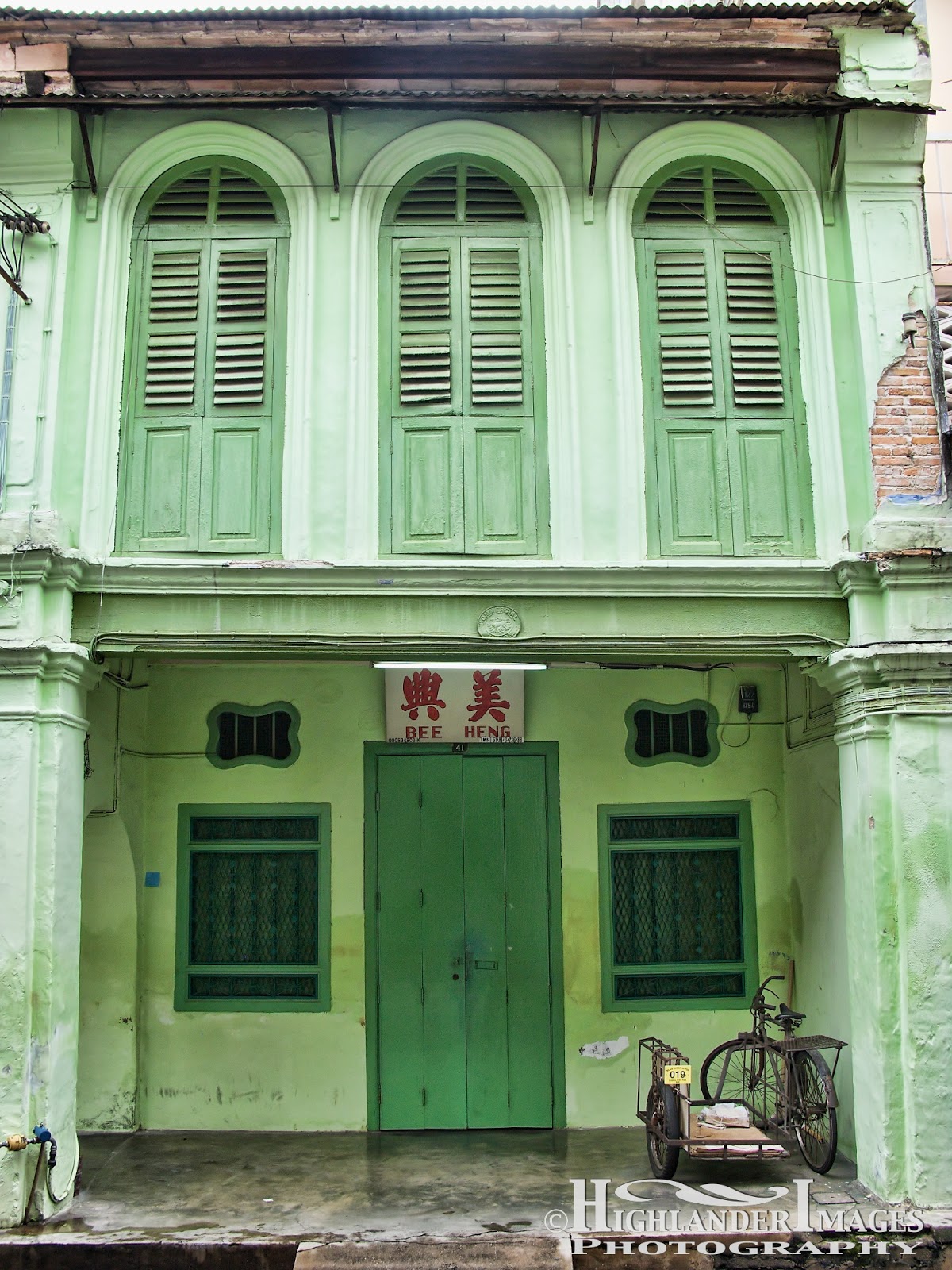
Green Door and Shutters


Ipoh is a wonderful historic city to wander through with many of the streets exhibiting some classic old shophouse architecture. This brightly painted house down a side lane stood out against the crowd with the bicycle parked outside setting this off and resulting in a timeless image.

Saturday, February 19, 2011

Yuewang Temple


The Yue Fei Temple or commonly known in Chinese as Yuewang Temple is a temple built in honor of Yue Fei, a general of the Southern Song dynasty when the capital of China was in Hangzhou. The temple ground is located near the West Lake, in central Hangzhou.
The temple was first constructed in the during the Song Dynasty in 1221 to commemorate Yue Fei. The site includes Yue Fei's Temple, Loyalty Temple and Yue Fei’s Mausoleum inside. The temple was reconstructed several times in later date. The tombs and the tomb sculptures in the temple all dates from the 12th century, and have been meticulously restored.

Friday, February 18, 2011

Museo de Arte Thyssen-Bornemisza


This is a rather unique and high impact advertisement printed and dropped full length on a building in Madrid, Spain. It was even custom made to fit around the large entrance door. The advert is for an exhibition called La Sombra (Shadows) at the Museo de Arte Thyssen-Bornemisza.


Thursday, February 17, 2011

Papaya


This beautiful papaya tree was seen in Bali, Indonesia. The papaya (from Carib via Spanish), papaw or pawpaw is the fruit of the plant Carica papaya, in the genus Carica. It is native to the tropics of the Americas, and was first cultivated in Mexico several centuries before the emergence of the Mesoamerican classic cultures.


It is a large tree-like plant, with a single stem growing from 5 to 10 metres (16 to 33 ft) tall, with spirally arranged leaves confined to the top of the trunk. The lower trunk is conspicuously scarred where leaves and fruit were borne. The leaves are large, 50–70 centimetres (20–28 in) diameter, deeply palmately lobed with 7 lobes. The tree is usually unbranched if unlopped. The flowers are similar in shape to the flowers of the Plumeria, but are much smaller and wax-like. They appear on the axils of the leaves, maturing into the large 15–45 centimetres (5.9–18 in) long, 10–30 centimetres (3.9–12 in) diameter fruit. The fruit is ripe when it feels soft (like a ripe avocado or a bit softer) and its skin has attained an amber to orange hue. It is the first fruit tree to have its genome deciphered.

Wednesday, February 16, 2011

Caves of Altamira


Altamira (Spanish for 'high views') is a cave in Spain famous for its Upper Paleolithic cave paintings featuring drawings and polychrome rock paintings of wild mammals and human hands.
Its special relevance comes from the fact that it was the first cave in which prehistoric cave paintings were discovered. When the discovery was first made public in 1880, it led to a bitter public controversy between experts which continued into the early 20th century, as many of them did not believe prehistoric man had the intellectual capacity to produce any kind of artistic expression. The acknowledgement of the authenticity of the paintings, which finally came in 1902, changed forever the perception of prehistoric human beings.
It is located near the town of Santillana del Mar in Cantabria, Spain, 30 km west of the city of Santander. The cave with its paintings has been declared a World Heritage Site by UNESCO.

Steely Dan composed a song about the caves called "Caves of Altamira" which was released on their "Royal Scam" album in 1976

On the stone an ancient hand
In a faded yellow-green
Made alive a worldly wonder
Often told but never seen
Now and ever bound to labor
On the sea and in the sky
Every man and beast appeared
A friend as real as I


Tuesday, February 15, 2011

Break Time


This shoe shiner in Madrid, Spain takes a break to read the paper during a quiet spell. I loved the contrast of strong colours between the red of his chair and the green wall behind.

Monday, February 14, 2011

Danau Batur


Lake Batur or Danau Batur is a crater lake that fills the south-eastern side of the Batur caldera. It is Bali's largest lake and has an area of approximately 18 square kilometers. Just as Gunung Agung is revered by Pura Besakih as Bali's largest mountain, Batur is revered by its own temple, Pura Ulun Danu Batur, as Bali's largest lake. Pura Batur is considered Bali's second-most important temple, after Besakih.

Sunday, February 13, 2011

Leifeng Pagoda on West Lake

Leifeng Pagoda is a five story tall tower with eight sides, located on Sunset Hill south of the West Lake in Hangzhou, China. Originally constructed in the year AD 975, it collapsed in 1924 but was rebuilt in 2002, since when it has been a popular tourist attraction.

Saturday, February 12, 2011

10 Annoying Habits of Photographers

Now of course I don't do any of these bad habits but if you read this and find that perhaps there are one of these bad habits (or even a number of these bad habits) that you are guilty of just take note and remember ..... WE ARE WATCHING YOU! 

By the way bonus points if you can guess who the person is in the first photo.


No. 1 Lens Cap On  - Carrying your camera with lens cap on. 
You need to be ready to grab that next picture and you need to be able to react quickly. That extra few seconds you need to get the lens cap off is probably more than enough time for you to miss the shot. The only time your lens cap should be on is when your camera is packed away in your camera bag. Worried about scratching or damaging your lens? - get a lens filter which offers protection and is cheap to replace if damaged.


o -------- o

No. 2 Lens Hood Reversed - Shooting with lens hood on camera in reversed position. 
If you are going to use a lens hood ... then use it. Otherwise throw the piece of plastic away. It does nothing in the reversed position on the lens .... and looks very un-cool.

o -------- o

No. 3 Unnecessary Flash - Using flash taking a picture through a window 
Think about what the flash is doing. If there is a window in front of the flash then all that is going to happen is an extreme back scattering of light rendering your picture into a mass of light reflections.

o -------- o

No. 4 Beep - Having that annoying 'beep' function switched on when focusing. 
I rank this on the annoyance scale just below those annoying squeaky shoes that some parents seem to insist their toddlers wear.

o -------- o

No. 5 Airport Photos - Taking photos of friends in airport terminal
This is usually executed with some bland, grey airport background which could be any airport in the world. Honestly if you are going to take a photo of friends in the dream holiday location you have just arrived at please find a more interesting background than an airport wall. Airports are no longer enjoyable and are places to move through as quickly as possible, so forget the photos.

o -------- o

No. 6 The Two Fingered Salute - Getting subjects to pose with two fingers raised in the peace sign. 
This seems to be an unfortunate trait of Malaysians posing for photos. Learn to use the two fingers in the appropriate situation like when driving along Old Klang Road and signaling to the guy who has just cut you up from the outside lane.

o -------- o

No. 7 Lens Changing  - Changing lenses with no regard to outside dust getting into camera. 
Keep it clean. Your camera may be equipped with the latest sensor cleaning technology but do try and minimise the amount of dust, dirt and grunge that can enter your camera body when changing lenses. When changing lenses point your camera downwards to minimise dust entry. This may save you hours of post-processing and cloning out all the dust specks or worse still an expensive sensor replacement.

o -------- o

No. 8 Countdown - Counting down "1-2-3" before taking picture. 
This only assures you of getting a picture with all of your subjects straining to pose with a fake, plastic smile. A guaranteed method to capture a bad shot. Get your subjects to relax, talk to them, crack some jokes and take the shot when you identify that special moment or even better take numerous shots to ensure you get one keeper.

o -------- o

No. 9 Flash Fail - Not being able to get built-in camera flash to operate. 
So many times I'm sure you have seen this particular camera man trying numerous times to take his shot with his flash failing to fire. He fumbles with his camera, ask his subjects to pose again and then the whole cycle continues. The camera man appears to randomly press buttons on the camera in the hope that he will get lucky. Learn how to use your flash and know where all the operation buttons are on your camera so you can do this in the dark without looking.

o -------- o

No 10. Mega Posting 
Posting massive posts of images on Facebook or Flickr
This usually includes posting of every single image shot including all the badly composed and out-of-focus shots. Do some basic editing and screen out all the bad shots keeping your posted images to the point and without multiple repetitions of your girlfriend in 20 or 30 different poses. Yes we know she's a looker but after scrolling through 20 images of her boredom will set in.

o -------- o


Cambodian Temple Week - Ta Prohm


Ta Prohm  is the modern name of a temple at Angkor, built in the Bayon style largely in the late 12th and early 13th centuries and originally called Rajavihara (in Khmer). Located approximately one kilometre east of Angkor Thom and on the southern edge of the East Baray near Tonle Bati, it was founded by the Khmer King Jayavarman VII as a Mahayana Buddhist monastery and university. Unlike most Angkorian temples, Ta Prohm has been left in much the same condition in which it was found: the photogenic and atmospheric combination of trees growing out of the ruins and the jungle surroundings have made it one of Angkor's most popular temples with visitors.

The design of Ta Prohm is that of a typical "flat" Khmer temple (as opposed to a temple-pyramid or temple-mountain, the inner levels of which are higher than the outer). Five rectangular enclosing walls surround a central sanctuary. Like most Khmer temples, Ta Prohm is oriented to the east, so the temple proper is set back to the west along an elongated east-west axis.

The outer wall of 1000 by 650 metres encloses an area of 650,000 square metres that at one time would have been the site of a substantial town, but that is now largely forested. An inscription at Ta Phrom indicates that that 12,460 people serviced this temple.

There are entrance gopuras at each of the cardinal points, although access today is now only possible from the east and west. 

Friday, February 11, 2011

Cambodian Temple Week - Preah Khan


Preah Khan is a temple at Angkor, built in the 12th century for King Jayavarman VII. It is located northeast of Angkor Thom and just west of the Jayatataka Baray, with which it was associated. It was the centre of a substantial organisation, with almost 100,000 officials and servants. 

The temple is flat in design, with a basic plan of successive rectangular galleries around a Buddhist sanctuary complicated by Hindu satellite temples and numerous later additions. Like the nearby Ta Prohm, Preah Khan has been left largely unrestored, with numerous trees and other vegetation growing among the ruins.

Preah Khan was built on the site of Jayavarman VII's victory over the invading Chams in 1191. Preah Khan is one of the few monuments to have kept its original name. The name Preah Khan means "sacred sword" and is derived from the meaning of the original — Nagara Jayasri (holy city of victory). The site may previously have been occupied by the royal palaces of Yasovarman II and Tribhuvanadityavarman.

The temple's foundation stela has provided considerable information about the history and administration of the site

More than a single temple, the monument was in its time a real city with a whole population divided according to their functions. The temple was also a site of Buddhist studies with its retinue of spiritual masters and their disciples.