Showing posts with label colonial. Show all posts
Saturday, October 08, 2011
The Blue Mansion
Cheong Fatt Tze Mansion is located at 14 Leith Street, 10200 George Town, Penang, Malaysia. The mansion's indigo-blue outer wall makes it a very distinct building in the area and is locally known as the Blue Mansion.
The Circa 1880s mansion built by the merchant Cheong Fatt Tze at the end of 19th century has 38 rooms, 5 granite-paved courtyards, 7 staircases & 220 vernacular timber louvre windows. The architecture of the mansion however originates from the Su Chow Dynasty Period in China. Other features of the house include Gothic louvered windows, Chinese cut and paste porcelain work, Stoke-on-Trent floor tiles made of encaustic clay in geometric pieces all shaped to fit to form a perfect square, Glasgow cast iron works by MacFarlane's & Co. and Art Nouveau48 stained glass windows. The mansion was originally built with careful attention to the principles of Feng Shui. For example, it faces the sea and has Penang Hill behind it, a strategic placement boasting an un-imped view and a promontory at the rear for protection; the domestic annex is built in front of it to prevent any road being built to create a T-Junction in front of it; it has water running through a meandering network of pipes that begin from the eaves of the roof, channeled through the upper ceiling, down the walls collecting in the central courtyard before being channeled away from the property via a similar network of pipes, in this case, underneath the entire flooring system and is built with a step in the middle to create a slope (to ride on the dragons back).
The distinctive blue colour of the mansion is the result of mixing lime with natural blue dye made from the Indigo plant. The blue was very popular in the Colonial period and the dye was imported from India to Penang by the British. The lime-wash was very effective in a tropical weather as it absorbed moisture and cooled the house whilst dispelling moisture without damage to the structural integrity of the walls. Though white was the most easily-available colour, the indigo-blue was chosen as the former is a colour synonymous with death for the Chinese.
The mansion was purchased from Cheong Fatt Tze's descendants in 1989 by a group of local Penang individuals in order to save the edifice from encroaching development and possible demolition. While it remains until now, a private-residence, the property operates as a 16 Room Bed & Breakfast-cum-museum as part of the adaptive-reuse of an ongoing restoration project.
The mansion has been featured in various films including the 1993 Oscar-winning French film "Indochine" starring Catherine Deneuve, 'The Red Kebaya', "Road to Dawn', '3rd Generation' and the critically acclaimed 'The Blue Mansion' in 2009 by Singapore Director Glen Goei of 'Forever Fever' fame. The mansion has also been featured in programs broadcast on various international tv channels (CNN, BCC, The History Channel, Discovery Travel & Living).
Thursday, October 06, 2011
Blue Indigo Window
This blue coloured shuttered window was photographed in Lorong Stewart in Georgetown, Penang, Malaysia. The back streets and lanes of Georgetown are great to wander through to view old historical and heritage houses. I particularly like windows and doors and this window was a great example of that run-down, dilapidated and decaying style that I like in these Asian buildings. You can make out a blue colour in the surrounding walls as well as on the window shutters and this was a very typical colour used in the colonial period. The distinctive blue colour is made by mixing lime with the natural blue dye made from the indigo plant and this dye was imported from India during those days.
Labels:
architecture,
blue,
colonial,
colour,
Georgetown,
HDR,
HDR Efex Pro,
India,
indigo,
lane,
lime,
Malaysia,
Nik Software,
Penang,
shutters,
street,
urbex,
wall,
window
Wednesday, April 13, 2011
Colombo Architecture
This wonderful old building in the centre of Colombo, Sri Lanka exhibits some classic architecture although now run down and dilapidated. Colombo has wildly varying architecture that span centuries and depict various styles. Many colonial buildings influenced by the Portuguese, Dutch and British exist alongside structures built in Buddhist, Hindu, Islamic, Indian and Contemporary architectural styles. No other place is this more evident in the heart of the city the Fort area. Here one may find new towering skyscrapers as well as historic buildings dating far back as the 1700s.
Labels:
architecture,
building,
Colombo,
colonial,
Sri Lanka
Friday, May 21, 2010
Sail & Anchor
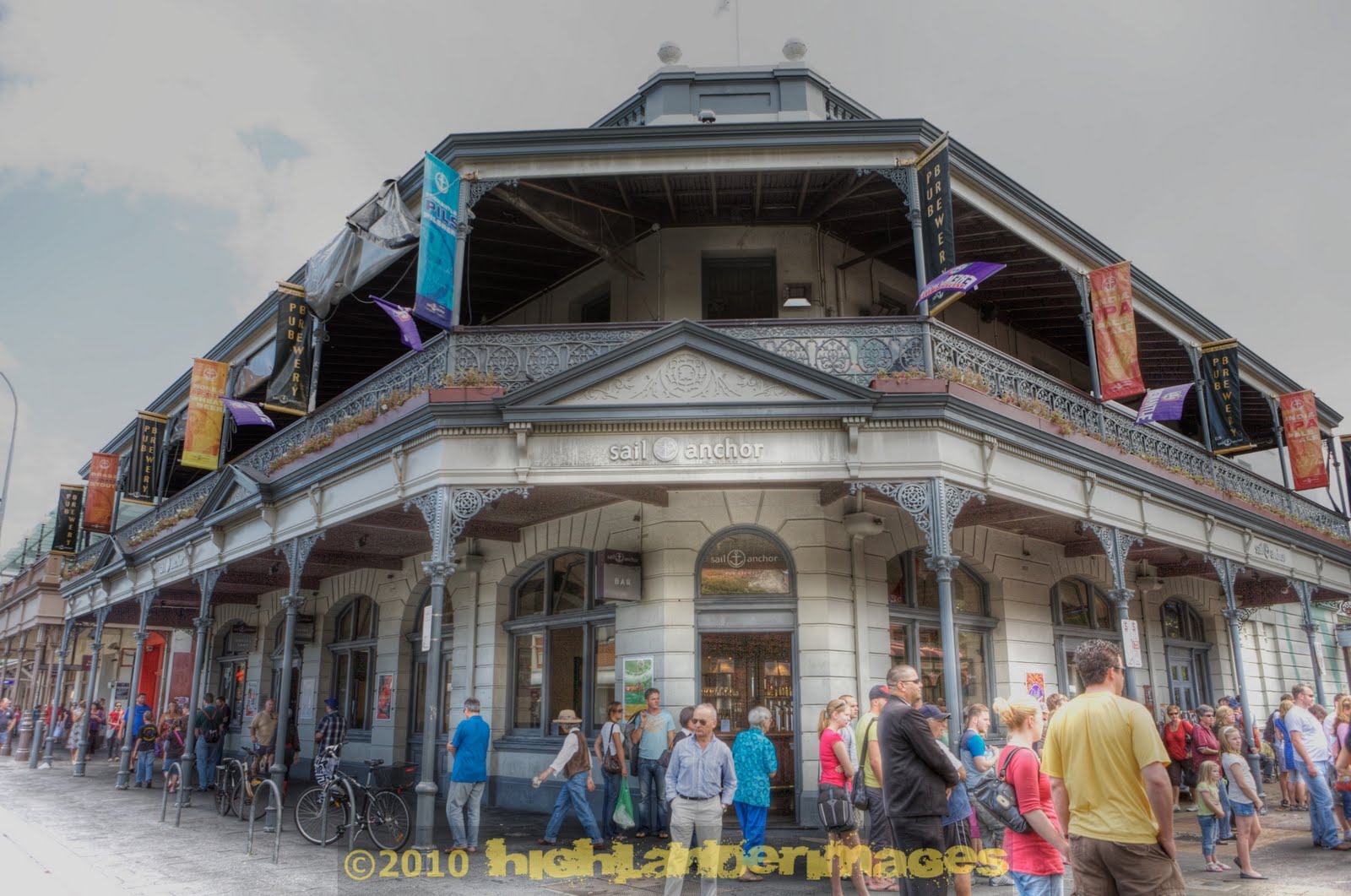
Fremantle, Western Australia has some wonderful old buildings and the Sail & Anchor bar is a great example of this exhibiting the typical colonial style architecture. Fremantle's streets are filled with some of the best examples of mid-Victorian and Edwardian architecture. St Johns Anglican Church, Fremantle Town Hall, Fremantle Markets, the Round House Western Australias oldest public building are fascinating to examine. But just about anywhere you look, fine old buildings stand well preserved amidst the newer, trendier establishments. Many of Fremantles offices, galleries, restaurants and shops are housed in these grand old buildings. A visit to Fremantle would not complete without having a coffee or meal on South Terrace, otherwise known as the Cappuccino Strip. This cosmopolitan area houses many coffee houses, restaurants and pubs where people congregate to unwind and enjoy lifes simple pleasures amongst the buzzing atmosphere, day or night, anytime of the week. The Sail and Anchor is on South Terrace and was Australias first pub and microbrewery.
Labels:
anchor,
architecture,
Australia,
brewery,
colonial,
Fremantle,
pub,
sail,
Sail and Anchor,
South Terrace,
WA,
Western Australia
Saturday, April 03, 2010
Old China Cafe
The Old China Cafe lies in the heart of Chinatown in Kuala Lumpur and entering this cafe brings you back to those nostalgic, pre-war colonial days. The saloon doors on the entrance give you an impression of a some sort of cowboy town establishment. The building used to be the old guild hall of the Selangor & Federal Territory Laundry Association. The guild was set up at the turn of the century and moved to this part of Chinatown in the 1920s.
Many of the architectural details of the building have remained unchanged, even the interior doors still have wooden latches. Inside there are two large mirrors that face each other and these are traditional feng shui mirrors that Chinese believe would perpetually reflect the good luck when the first rays of the morning sun light up the interior.
The cafe now serves a range of southeast Asian cuisine which originates from the Baba Nonya communities of Malacca and Penang which features Malay spices as well as Chinese ingredients and cooking techniques. The Old China Cafe tries to maintain a semblance of the Chinese community’s old social life which will unfortunately soon fade into history.
Labels:
architecture,
cafe,
China,
Chinatown,
colonial,
Kuala Lumpur,
old,
restaurant
Disappearing Heritage
Even in the rapidly developing and modern city centre of Kuala Lumpur you can still find some wonderful backstreets with great examples of colonial Chinese architecture. This old abandoned house in Jalan Panggong (Theatre Street) in Chinatown is a good example of this and it is a shame that in a few years time many of these old houses and shophouses will be pulled down to make way for new high-rise developments.
Labels:
architecture,
chinese,
colonial,
heritage,
house,
Jalan Panggong,
Kuala Lumpur,
Malaysia,
shophouse,
theatre
Tuesday, February 23, 2010
Singapore Transformation
Singapore has always been close to my heart as this was the first place I lived when I moved to Asia in 1984. The Singapore River waterfront has changed dramatically since then, from rows of run down godowns to a modern high-rise bustling financial centre. The river front now offers a wonderful variety of local and international restaurants, bars, night spots as well as museums, galleries and pedestrian walkways or river cruises to take in the views of the city.
The old post office that I remembered back in the early 80's has now magically been renovated into the top class 5-star Fullerton Hotel which commands a strategic location right at the river mouth and offers its visitors a nostalgic flash-back to those earlier colonial days of Singapore.
Subscribe to:
Posts (Atom)