- a dam and collectively owned irrigation canals
- the rice terraces within clearly defined subak boundaries
- all the farmers who cultivate land within the subak boundaries
- a religious unit consisting of rituals on the individual level, the subak level, and the inter- subak level
- a legal unit, with a clearly defined set of rules that regulates the rights and duties of its members
Showing posts with label Indonesia. Show all posts
Friday, October 05, 2012
Rice Bowl of Bali
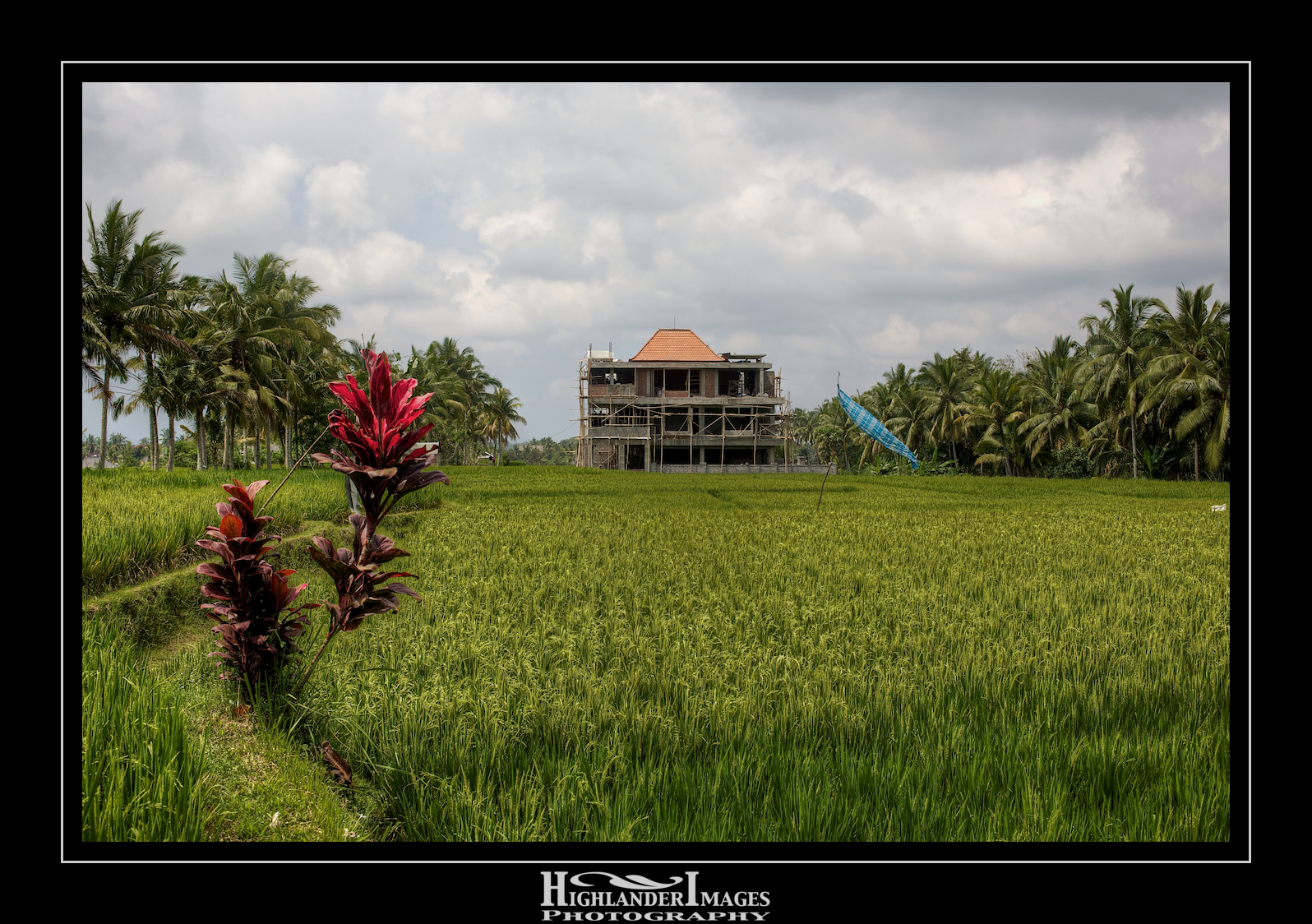
With the rich and fertile volcanic soils and plentiful water, rice cultivation in Bali is of key agricultural importance and is well known worldwide for its unique and efficient use of irrigation water in the many terraced paddy fields. One of the fundamental backbones of this rice production is the subak. Subak is the name of water management or irrigation system for paddy fields in Bali. For Balinese, irrigation is not simply providing water for the rice plants, but water is used to construct a complex, artificial ecosystem. Paddy fields in Bali are built around water temples and the allocation of water is supervised by a priest.
The subak comprises many individual parts:
With the growth of tourism and urbanisation in Bali the subak is coming under increasing pressure. with farmers tempted to sell their rice fields and move into other more lucrative jobs such as construction or tourism. The highly productive arable land is unfortunately getting lost at an accelerated rate due to excessive building and tourist activities.
Labels:
agriculture,
arable,
Bali,
bowl,
cultivation,
dam,
ecosystem,
field,
Indonesia,
irrigation,
paddy,
religious,
rice,
soil,
subak,
tourism,
Ubud,
urbanisation,
volcanic,
water
Saturday, December 10, 2011
Balinese Cacao
In the hills of Bali you can find many farms growing cocoa, vanilla and coffee plants. Cocoa bean (also cacao bean, often simply cocoa and cacao) is the dried and fully fermented fatty seed of Theobroma cacao, from which cocoa solids and cocoa butter are extracted. They are the basis of chocolate, as well as many Mesoamerican foods such as mole sauce and tejate.
A cocoa pod (fruit) has a rough leathery rind about 3 cm thick (this varies with the origin and variety of pod). It is filled with sweet, mucilaginous pulp (called 'baba de cacao' in South America) enclosing 30 to 50 large seeds that are fairly soft and white to pale lavender in color. While seeds are usually white, they become violet or reddish brown during the drying process. The exception is rare varieties of white cacao, in which the seeds remain white.
Tuesday, December 06, 2011
Tirtha Empul Temple
Tirtha Empul Temple was built in 926 A.D. during the Warmadewa dynasty (from the 10th to 14th centuries), at a site where there was a large water spring.
On the left side of the temple is a modern villa on the hill. built for President Sukarno's visit in 1954, which is now used as a rest house for important guests.
More than a thousand years ago a powerful King named Mayadenawa ruled over a vast area which included Bali. Mayadenawa possessed the spiritual power to transform himself into anything he desired. Unfortunately he misused his powers and became a cruel, black magician.
A priest named Sang Kulputih appealed to Indra to come to earth to kill Mayadenawa.Because he had many spies, Mayadenawa learned about the upcoming attack in time and managed to organize his defenses. However Lord Indra's forces were superior and therefore victorious. Most of King Mayadenawa troops fled, leaving him almost without defense.
Then the war was interrupted by nightfall. When Indra's forces slept, Mayadenawa stole into Indra's camp, walking on the sides of his feet as to leave no foot prints, and created a pool of poisoned water. This way of walking gave Tampaksiring its name, for tampak siring is Balinese for 'without imprints'. He left as he came and when Indra's forces woke up the next morning and discovered the water pool, they drank from it and became violently sick.
When Indra found out what happened, he created a large spring of fresh water by stabbing his flag pole to the ground.The clear water was able to cure the sickness of his army. The spring was called Tirtha Empul, which means bubbling spring.
Mayadenawa fled, chased by the forces of Indra. During his flight he transformed himself a number of times, but he couldn't trick Indra with his disguises. When he had transformed himself into a stone, he was shot by Indra with an arrow. A stream of blood flowed from the stone, forming the river Petanu. And for a thousand years this river would be cursed. Rice fields irrigated with its water would make the rice grow fast, but once harvested, blood would come out of it and it would smell bad.
The death of King Mayadenawa is symbolic for the victory of good (dharma) over evil (adharma). The day of Mayadenawa's death is still celebrated, every 210 days according to the Balinese Pawukon calendar, and this day is generally known as Galungan Day.
Monday, November 28, 2011
Volcanic Vegetables
The rich volcanic soil on the banks of Lake Batur in Bali beneath the active volcano, Gunung Batur, provides a rich and fertile base for the growth of local vegetables. As you drive round the lake you can see many local farmers in the vegetable fields tending to their crops.
One of the best and most simple meals I had was right here in the middle of the vegetable fields where a small restaurant served up local rice along with fresh vegetables from the fields and fish caught from the lake .... washed down with the local Bintang beer of course!
Labels:
Bali,
beer,
Bintang,
farming,
fertile,
fish,
Gunung Batur,
Indonesia,
Lake Batur,
organic,
rice,
rich,
soil,
vegetables,
volcano
Friday, November 25, 2011
The Tavern
The Tavern Bar in the Aryaduta Hotel, Jakarta used to be a real hot-spot but as you can see from this i-phone panoramic shot the place is now very quiet. It was famous for it's pub food, particularly the hot-stone steaks and the resident band who were invariably from Philippines. With all the new hot-spots in Jakarta it looks like the crowd has moved on leaving The Tavern more spacious but with little atmosphere now.
Sunday, November 20, 2011
Tanah Lot
This is a slightly different view of the famous Tanah Lot temple in Bali. Tanah Lot means "Land [sic: in the] Sea" in Balinese language Located in Tabanan, about 20 km from Denpasar, the temple sits on a large offshore rock which has been shaped continuously over the years by the ocean tide.
Tanah Lot is claimed to be the work of the 15th century priest Nirartha. During his travels along the south coast he saw the rock-island's beautiful setting and rested there. Some fishermen saw him, and bought him gifts. Nirartha then spent the night on the little island. Later he spoke to the fishermen and told them to build a shrine on the rock for he felt it to be a holy place to worship the Balinese sea gods.
The Tanah Lot temple was built and has been a part of Balinese mythology for centuries. The temple is one of seven sea temples around the Balinese coast. Each of the sea temples were established within eyesight of the next to form a chain along the south-western coast. However, the temple had significant Hindu influence.
At the base of the rocky island, poisonous sea snakes are believed to guard the temple from evil spirits and intruders. A giant snake purportedly protects the temple, which was created from Nirata’s scarf when he established the island.
Friday, November 04, 2011
Pacific Place Panorama
The i-phone is now a very powerful mobile device for photography. .... yes it's i-Phone Friday again! Alongside the camera there are now many many apps that can assist you to edit and post-process the picture. This photograph was taken using an app called 360 which obviously allows you to take panoramas and stitch these in phone .... something that would have taken a very powerful computer and an expensive software application to execute a few years ago.
This image (or group of individual images) was taken at Pacific Place Shopping Centre in Jakarta, Indonesia.
Saturday, October 29, 2011
The Guardian of The Gate
This imposing statue at the entrance of a Ubud Palace (Puri Saren) on Bali appears to be like a guard on duty preventing the entry of any unwanted guests.
Puri Saren Ubud (Ubud Palace) is an Ubud Kingdom Palace with beautiful Balinese traditional houses as a residence of the Ubud King. It is set in the center of Ubud Bali with a traditional art market just in front of it and was founded by Ida Tjokorda Putu Kandel who commanded from year 1800 - 1823.
Labels:
Bali,
black,
guard,
guardian,
Indonesia,
monochrome,
Puri Saren,
Silver Efex Pro,
statue,
Ubud,
Ubud Palace,
white
Wednesday, October 19, 2011
Indonesian Gambang
Indonesian Gambang by HighlanderImages
A gambang, properly called a gambang kayu ('wooden gambang') is a xylophone-like instrument used among peoples of Indonesia and the southern Philippines in gamelan and kulintang, with wooden bars as opposed to the metallic ones of the more typical metallophones in a gamelan. A largely obsolete instrument, the gambang gangsa, is a similar instrument made with metal bars.
The bars of the instrument are made of a dense wood, generally teak. It also found in ironwood (kayu besi). The bars mounted in a deep wooden case that serves as a resonator. Instruments typically have 17-21 keys that are easily removed, and are kept in place by having a hole through which a nail is placed. Generally a full gamelan has two sets, one gambang pelog and the other one gambang slendro.
A pair of long thin mallets (tabuh), made of flexible water buffalo horn tipped with felt, are used to play the instrument. Gambangs are generally played in parallel octaves (gembyang). Occasionally, other styles of playing are employed such as playing kempyung which are playing two notes separated by two keys. Unlike most other gamelan instruments, no dampening is required, as the wood does not ring like the metal keys of other instruments.
The gambang is used in a number of gamelan ensembles. It is most notable in the Balinese gamelan Gambang. In Javanese wayang, it is used by itself to accompany the dalang in certain chants. Within a full gamelan, it stands out somewhat because of the high speed of playing, and contrasting timbre because of its materials and more because it has a wider melodic range than the other instruments.
In Javanese gamelan, the gambang plays cengkok like the other elaborating instruments. However, the repertoire of cengkok for the gambang is more rudimentary than for other instruments (for instance, the gendér), and a great deal of variation is accepted.
The gambang gangsa has a similar construction, although it generally has fewer keys (typically 15) and is thus somewhat smaller. It has largely been replaced by the saron family of instruments. It was formerly thought to have been a forerunner of the one-octave saron, although more recent evidence, including the appearance of the saron in reliefs at Borobudur in the 9th century, indicate that the instruments are of the same age or that the one-octave saron is older.
In early 19th century writings on the Javanese gamelan, it seems to have been played like the gambang kayu; that is, as an elaborating instrument. Later, by 1890, it seems to have merely substituted for a saron, and have been restricted to a small range. Mantle Hood associated this use of limited range to a preference for certain octave arrangements of the cadences in various pathet.
Labels:
Borobudur,
gambang,
Indonesia,
instrument,
Java,
music,
musical,
soundcloud,
Yogyakarta
Wednesday, August 24, 2011
Earthquake Destroys Temple Complex
The effects of numerous earthquakes can be clearly seen at this World Heritage Site in Indonesia where the temples collapsed in the 16th century.
Prambanan is a ninth century Hindu temple compound in Central Java, Indonesia, dedicated to the Trimurti, the expression of God as the Creator (Brahma), the Sustainer (Vishnu) and the Destroyer (Shiva). The temple compound is located approximately 18 km east of Yogyakarta city on the boundary between Yogyakarta and Central Java province.
The temple, a UNESCO World Heritage Site, is the largest Hindu temple in Indonesia, and is one of the largest Hindu temples in south-east Asia. It is characterised by its tall and pointed architecture, typical of Hindu temple architecture, and by the towering 47m high central building inside a large complex of individual temples.
Labels:
architecture,
collapse,
destruction,
earthquake,
Hindu,
Indonesia,
Java,
Prambanan,
temple,
UNESCO,
World Heritage Site
Wednesday, June 29, 2011
Prambanan
Prambanan is a ninth century Hindu temple compound in Central Java, Indonesia, dedicated to the Trimurti, the expression of God as the Creator (Brahma), the Sustainer (Vishnu) and the Destroyer (Shiva). The temple compound is located approximately 18 km east of Yogyakarta city on the boundary between Yogyakarta and Central Java province.
The temple, a UNESCO World Heritage Site, is the largest Hindu temple in Indonesia, and is one of the largest Hindu temples in south-east Asia. It is characterised by its tall and pointed architecture, typical of Hindu temple architecture, and by the towering 47m high central building inside a large complex of individual temples.
Monday, May 02, 2011
Stupas of Borobudur
Following up from my previous post here is another view of the magnificent Borobudur complex close to Yogyakarta, Java, Indonesia. These large bell-shape structures are known as stupas and some of them contain a statue of Buddha. A stupa is a mound-like structure containing relics, typically the remains of Buddha, used by Buddhists as a place of worship.
Borobudur is built as a single large stupa, and when viewed from above takes the form of a giant tantric Buddhist mandala, simultaneously representing the Buddhist cosmology and the nature of mind. The foundation is a square, approximately 118 meters (387 ft) on each side. It has nine platforms, of which the lower six are square and the upper three are circular. The upper platform features seventy-two small stupas surrounding one large central stupa. Each stupa is bell-shaped and pierced by numerous decorative openings. Statues of the Buddha sit inside the pierced enclosures.
Labels:
Borobudur,
buddha,
Buddhist,
Indonesia,
Java,
monumement,
temple,
Yogyakarta
Saturday, April 16, 2011
Candi Lumbung
Candi Lumbung is located in the Prambana archaeological Park on the northwest side of modern Yogyakarta. It is a Buddhist temple dating from around 850AD and is situated between between Candi Prambanan and Candi Sewu. The main sanctuary is surrounded by to be surrounded by 16 smaller temples, most of which contain a raised altar with spaces marked for three images. In addition, there are niches in the back and side walls for additional deities.
Labels:
Candi Lumbung,
Indonesia,
Java,
Prambanan,
Yogyakarta
Thursday, April 14, 2011
f 1.2 Glasses
This becak driver in Yogyakarta, Indonesia had the biggest glasses I have seen for a long time. In photographic terms of f stop this was "big glass" and must have been in the order of f 1.2. This guy obviously spent his money on his eye wear and had none left over to attend to his teeth!
Tuesday, April 12, 2011
Wayang Topeng
Javanese masks are worn by actors in traditional dance dramas known in the Indonesian language as wayang topeng. The plots of the dramas are taken either from traditional Javanese stories about the hero Panji or from the two great epics, the Mahabharata and the Ramayana. Both epics came originally from India, but for more than a thousand years have been an integral part of the cultures of Indonesia and other countries in Southeast Asia.
Wayang topeng performances are held at night and last for at least several hours. The performers are professionals who may be permanently employed at the courts of the sultans of Solo and Jogjakarta (or Yogyakarta) in Central Java, may be supported by government cultural agencies, or may be hired by wealthy villagers or townspeople to help celebrate a marriage or other festive event. Performances outside the royal courts are traditionally free for everyone who lives in the neighborhood. In the days before movies and television, they were exciting events for rural people, anticipated for months ahead of time and discussed for months afterward.
Labels:
art,
dance,
Indonesia,
Java,
Javanese,
mask,
performance,
topeng,
wayang,
Yogyakarta
Sunday, April 03, 2011
Borobudur
Borobudur is a 9th-century Mahayana Buddhist monument near Magelang, Central Java, Indonesia. The monument comprises six square platforms topped by three circular platforms, and is decorated with 2,672 relief panels and 504 Buddha statues. A main dome, located at the center of the top platform, is surrounded by 72 Buddha statues seated inside perforated stupa.
The monument is both a shrine to the Lord Buddha and a place for Buddhist pilgrimage. The journey for pilgrims begins at the base of the monument and follows a path circumambulating the monument while ascending to the top through the three levels of Buddhist cosmology, namely Kāmadhātu (the world of desire), Rupadhatu (the world of forms) and Arupadhatu (the world of formlessness). During the journey the monument guides the pilgrims through a system of stairways and corridors with 1,460 narrative relief panels on the wall and the balustrades.
Evidence suggests Borobudur was abandoned following the 14th-century decline of Buddhist and Hindu kingdoms in Java, and the Javanese conversion to Islam. Worldwide knowledge of its existence was sparked in 1814 by Sir Thomas Stamford Raffles, then the British ruler of Java, who was advised of its location by native Indonesians. Borobudur has since been preserved through several restorations. The largest restoration project was undertaken between 1975 and 1982 by the Indonesian government and UNESCO, following which the monument was listed as a UNESCO World Heritage Site. Borobudur is still used for pilgrimage; once a year Buddhists in Indonesia celebrate Vesak at the monument, and Borobudur is Indonesia's single most visited tourist attraction.
Labels:
Borobudur,
Buddhist,
Indonesia,
Java,
Magelang,
monument,
pilgrimage,
temple,
tourist,
UNESCO,
World Heritage Site,
Yogyakarta
Wednesday, March 30, 2011
Hotel Ibah
The prestigious Bali resort, steeped in Royal heritage, consists of 17 uniquely designed villas and suites in a spectacular location on the gently sloping valley of the Campuhan River.
Situated on two hectares of crown land in the heart of Ubud, Warwick Ibah Luxury Villas & Spa is created from a dream of Balinese Royalty. A hotel built to share the rejuvenating qualities of this special place with visitors of other cultures.
You will find Warwick Ibah at Campuhan, a place where two rivers meet, in the cultural and artistic center of the island.<
This classic Bali resort is located 5-minutes walking distance to Ubud’s main shopping area, and about 45-minutes drive from the airport, offers a truly unique experience. Enjoy the rejuvenating qualities of ancient holy grounds and share in the spirit, the beauty and the culture of Ubud Bali.
Tuesday, March 08, 2011
Black & White Batak House
This is another shot I took of a Batak house on the shores of Lake Toba in Sumatra, Indonesia. A previous shot of another house was shown in an earlier blog. For this image I post-processed to black and white using Silver Efex Pro 2 and this really brings out a lot of the details and tones of the old wooden building and adds a historical look to the finished image.
Labels:
Batak,
Indonesia,
Lake Toba,
post processing,
Silver Efex Pro 2,
Sumatra
Tuesday, March 01, 2011
Rural Bali
This is a very typical rural scene in the outskirts of Ubud, Bali, Indonesia. These stepped padi fields are very common and you can watch the locals tend the rice using traditional methods.
Rice, to the Balinese, is more than just the staple food; it is an integral part of the Balinese culture. The rituals of the cycle of planting, maintaining, irrigating, and harvesting rice enrich the cultural life of Bali beyond a single staple can ever hope to do. At the beginning of planting time, after the water buffalloes walk the rice fields several times to prepare them, ceremonies are held to carry the young stems of rice that have been nurtured in a special nursery. On each section of the rice fields, the corner nearest to Gunung Agung will receive the honor to be the first place to receive the young stems of rice.
The water level in each section is perfect; little streams of water effortlessly flow from the highest section up on top of the hill to the very bottom section. The planning and responsiblity of the irrigation and planting schedule are arranged through subak, a Balinese system that ties together rice cultivation with its water temple system. Historical evidence dates this system to around the 11th century, yet the yield per acre of a Balinese rice field is about the highest in the world!
Before planting, throughout growing time, at harvesting, ceremonies are held and offerings are presented to Dewi Sri, the goddess of rice. In the middle of rice fields far from the village, you often find little shrines with netaly presented flowers, fruit, and offerings for Dewi Sri.
Thursday, February 17, 2011
Papaya
This beautiful papaya tree was seen in Bali, Indonesia. The papaya (from Carib via Spanish), papaw or pawpaw is the fruit of the plant Carica papaya, in the genus Carica. It is native to the tropics of the Americas, and was first cultivated in Mexico several centuries before the emergence of the Mesoamerican classic cultures.
It is a large tree-like plant, with a single stem growing from 5 to 10 metres (16 to 33 ft) tall, with spirally arranged leaves confined to the top of the trunk. The lower trunk is conspicuously scarred where leaves and fruit were borne. The leaves are large, 50–70 centimetres (20–28 in) diameter, deeply palmately lobed with 7 lobes. The tree is usually unbranched if unlopped. The flowers are similar in shape to the flowers of the Plumeria, but are much smaller and wax-like. They appear on the axils of the leaves, maturing into the large 15–45 centimetres (5.9–18 in) long, 10–30 centimetres (3.9–12 in) diameter fruit. The fruit is ripe when it feels soft (like a ripe avocado or a bit softer) and its skin has attained an amber to orange hue. It is the first fruit tree to have its genome deciphered.
Subscribe to:
Posts (Atom)