Showing posts with label Bali. Show all posts

Sunday, April 06, 2014

Toil


toil


verb

1. work extremely hard or incessantly "we toiled away"
synonyms: work hard, labor, exert oneself, slave (away), grind away, strive, work one's fingers to the bone, put one's nose to the grindstone

noun

1. exhausting physical labor "a life of toil"
synonyms: hard work, labor, exertion, slaving, drudgery, effort, industry, 'blood, sweat and tears'


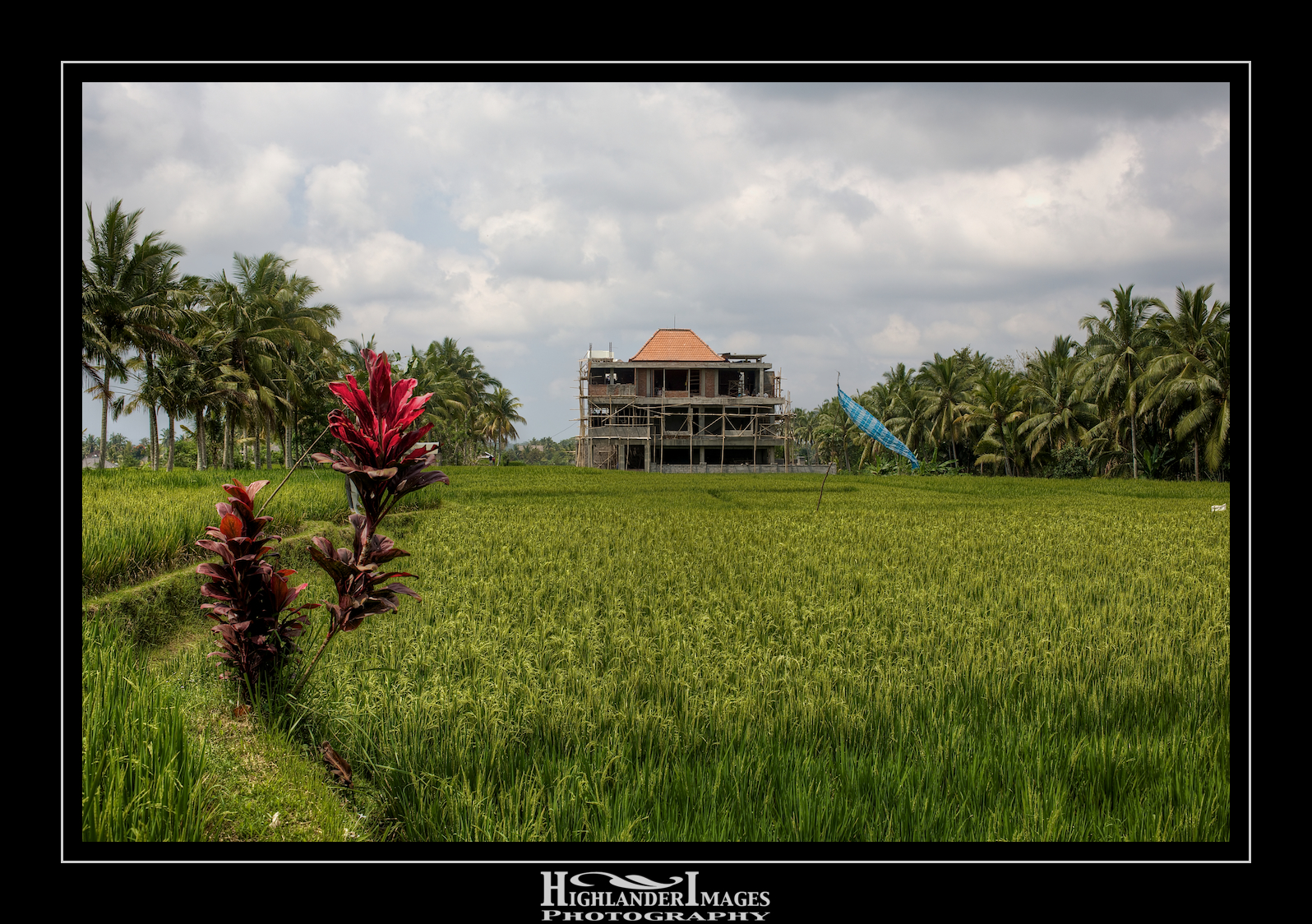
Walking through the rice paddy fields in central Bali close to Ubud you can witness the simple, rural way of life with the local people living directly from the land. Their daily life consists of incredible physical hard work and toil in the fields, tending their rice paddies, clearing the drainage ditches as well as looking after their livestock. In the heat of the intense tropical sun and wading through deep muddy pools of water and drainage ditches this is back breaking work and is certainly no easy idyllic tropical island life that we all imagine on an island such as Bali.


However what is clearly apparent is how well these local people look. They may be old, perhaps in their sixties or seventies or even older (it's sometimes hard to judge) but they are physically fit, slim and able bodied. In contrast our puny, overweight city-style bodies struggle in this climate and would not last long in these conditions.


Perhaps it is they who have it right and our modern society with all its apparent modernisation and technology have it all wrong. One thing is for sure; if there was a calamitous world event that would wipe out our existing technology and infrastructure then it would be folks like these that would be the survivors.


Friday, October 05, 2012

Rice Bowl of Bali


With the rich and fertile volcanic soils and plentiful water, rice cultivation in Bali is of key agricultural importance and is well known worldwide for its unique and efficient use of irrigation water in the many terraced paddy fields.  One of the fundamental backbones of this rice production is the subak.  Subak is the name of water management or irrigation system for paddy fields in Bali. For Balinese, irrigation is not simply providing water for the rice plants, but water is used to construct a complex, artificial ecosystem. Paddy fields in Bali are built around water temples and the allocation of water is supervised by a priest.


The subak comprises many individual parts:
  • a dam and collectively owned irrigation canals 
  • the rice terraces within clearly defined subak boundaries 
  • all the farmers who cultivate land within the subak  boundaries
  • a religious unit consisting of rituals on the individual level, the subak level, and the inter- subak level
  • a legal unit, with a clearly defined set of rules that regulates the rights and duties of its members


With the growth of tourism and urbanisation in Bali the subak is coming under increasing pressure. with farmers tempted to sell their rice fields and move into other more lucrative jobs such as construction or tourism. The highly productive arable land is unfortunately getting lost at an accelerated rate due to excessive building and tourist activities.


Saturday, December 10, 2011

Balinese Cacao


In the hills of Bali you can find many farms growing cocoa, vanilla and coffee plants. Cocoa bean (also cacao bean, often simply cocoa and cacao) is the dried and fully fermented fatty seed of Theobroma cacao, from which cocoa solids and cocoa butter are extracted. They are the basis of chocolate, as well as many Mesoamerican foods such as mole sauce and tejate.

A cocoa pod (fruit) has a rough leathery rind about 3 cm thick (this varies with the origin and variety of pod). It is filled with sweet, mucilaginous pulp (called 'baba de cacao' in South America) enclosing 30 to 50 large seeds that are fairly soft and white to pale lavender in color. While seeds are usually white, they become violet or reddish brown during the drying process. The exception is rare varieties of white cacao, in which the seeds remain white.

Tuesday, December 06, 2011

Tirtha Empul Temple


Tirtha Empul Temple was built in 926 A.D. during the Warmadewa dynasty (from the 10th to 14th centuries), at a site where there was a large water spring.
On the left side of the temple is a modern villa on the hill. built for President Sukarno's visit in 1954, which is now used as a rest house for important guests.
More than a thousand years ago a powerful King named Mayadenawa ruled over a vast area which included Bali. Mayadenawa possessed the spiritual power to transform himself into anything he desired. Unfortunately he misused his powers and became a cruel, black magician.
A priest named Sang Kulputih appealed to Indra to come to earth to kill Mayadenawa.Because he had many spies, Mayadenawa learned about the upcoming attack in time and managed to organize his defenses. However Lord Indra's forces were superior and therefore victorious. Most of King Mayadenawa troops fled, leaving him almost without defense.
Then the war was interrupted by nightfall. When Indra's forces slept, Mayadenawa stole into Indra's camp, walking on the sides of his feet as to leave no foot prints, and created a pool of poisoned water. This way of walking gave Tampaksiring its name, for tampak siring is Balinese for 'without imprints'. He left as he came and when Indra's forces woke up the next morning and discovered the water pool, they drank from it and became violently sick.
When Indra found out what happened, he created a large spring of fresh water by stabbing his flag pole to the ground.The clear water was able to cure the sickness of his army. The spring was called Tirtha Empul, which means bubbling spring.
Mayadenawa fled, chased by the forces of Indra. During his flight he transformed himself a number of times, but he couldn't trick Indra with his disguises. When he had transformed himself into a stone, he was shot by Indra with an arrow. A stream of blood flowed from the stone, forming the river Petanu. And for a thousand years this river would be cursed. Rice fields irrigated with its water would make the rice grow fast, but once harvested, blood would come out of it and it would smell bad.
The death of King Mayadenawa is symbolic for the victory of good (dharma) over evil (adharma). The day of Mayadenawa's death is still celebrated, every 210 days according to the Balinese Pawukon calendar, and this day is generally known as Galungan Day.

Monday, November 28, 2011

Volcanic Vegetables


The rich volcanic soil on the banks of Lake Batur in Bali beneath the active volcano, Gunung Batur, provides a rich and fertile base for the growth of local vegetables. As you drive round the lake you can see many local farmers in the vegetable fields tending to their crops.

One of the best and most simple meals I had was right here in the middle of the vegetable fields where a small restaurant served up local rice along with fresh vegetables from the fields and fish caught from the lake .... washed down with the local Bintang beer of course!

Sunday, November 20, 2011

Tanah Lot


This is a slightly different view of the famous Tanah Lot temple in Bali. Tanah Lot means "Land [sic: in the] Sea" in Balinese language Located in Tabanan, about 20 km from Denpasar, the temple sits on a large offshore rock which has been shaped continuously over the years by the ocean tide.
Tanah Lot is claimed to be the work of the 15th century priest Nirartha. During his travels along the south coast he saw the rock-island's beautiful setting and rested there. Some fishermen saw him, and bought him gifts. Nirartha then spent the night on the little island. Later he spoke to the fishermen and told them to build a shrine on the rock for he felt it to be a holy place to worship the Balinese sea gods.
The Tanah Lot temple was built and has been a part of Balinese mythology for centuries. The temple is one of seven sea temples around the Balinese coast. Each of the sea temples were established within eyesight of the next to form a chain along the south-western coast. However, the temple had significant Hindu influence.
At the base of the rocky island, poisonous sea snakes are believed to guard the temple from evil spirits and intruders. A giant snake purportedly protects the temple, which was created from Nirata’s scarf when he established the island.

Saturday, October 29, 2011

The Guardian of The Gate


This imposing statue at the entrance of a Ubud Palace (Puri Saren) on Bali appears to be like a guard on duty preventing the entry of any unwanted guests.

Puri Saren Ubud (Ubud Palace) is an Ubud Kingdom Palace with beautiful Balinese traditional houses as a residence of the Ubud King. It is set in the center of Ubud Bali with a traditional art market just in front of it and was founded by Ida Tjokorda Putu Kandel who commanded from year 1800 - 1823. 

Wednesday, March 30, 2011

Hotel Ibah


The prestigious Bali resort, steeped in Royal heritage, consists of 17 uniquely designed villas and suites in a spectacular location on the gently sloping valley of the Campuhan River. Situated on two hectares of crown land in the heart of Ubud, Warwick Ibah Luxury Villas & Spa is created from a dream of Balinese Royalty. A hotel built to share the rejuvenating qualities of this special place with visitors of other cultures. 
You will find Warwick Ibah at Campuhan, a place where two rivers meet, in the cultural and artistic center of the island.< This classic Bali resort is located 5-minutes walking distance to Ubud’s main shopping area, and about 45-minutes drive from the airport, offers a truly unique experience. Enjoy the rejuvenating qualities of ancient holy grounds and share in the spirit, the beauty and the culture of Ubud Bali.

Tuesday, March 01, 2011

Rural Bali


This is  a very typical rural scene in the outskirts of Ubud, Bali, Indonesia. These stepped padi fields are very common and you can watch the locals tend the rice using traditional methods. 

Rice, to the Balinese, is more than just the staple food; it is an integral part of the Balinese culture. The rituals of the cycle of planting, maintaining, irrigating, and harvesting rice enrich the cultural life of Bali beyond a single staple can ever hope to do. At the beginning of planting time, after the water buffalloes walk the rice fields several times to prepare them, ceremonies are held to carry the young stems of rice that have been nurtured in a special nursery. On each section of the rice fields, the corner nearest to Gunung Agung will receive the honor to be the first place to receive the young stems of rice. 
The water level in each section is perfect; little streams of water effortlessly flow from the highest section up on top of the hill to the very bottom section. The planning and responsiblity of the irrigation and planting schedule are arranged through subak, a Balinese system that ties together rice cultivation with its water temple system. Historical evidence dates this system to around the 11th century, yet the yield per acre of a Balinese rice field is about the highest in the world!
Before planting, throughout growing time, at harvesting, ceremonies are held and offerings are presented to Dewi Sri, the goddess of rice. In the middle of rice fields far from the village, you often find little shrines with netaly presented flowers, fruit, and offerings for Dewi Sri.

Thursday, February 17, 2011

Papaya


This beautiful papaya tree was seen in Bali, Indonesia. The papaya (from Carib via Spanish), papaw or pawpaw is the fruit of the plant Carica papaya, in the genus Carica. It is native to the tropics of the Americas, and was first cultivated in Mexico several centuries before the emergence of the Mesoamerican classic cultures.


It is a large tree-like plant, with a single stem growing from 5 to 10 metres (16 to 33 ft) tall, with spirally arranged leaves confined to the top of the trunk. The lower trunk is conspicuously scarred where leaves and fruit were borne. The leaves are large, 50–70 centimetres (20–28 in) diameter, deeply palmately lobed with 7 lobes. The tree is usually unbranched if unlopped. The flowers are similar in shape to the flowers of the Plumeria, but are much smaller and wax-like. They appear on the axils of the leaves, maturing into the large 15–45 centimetres (5.9–18 in) long, 10–30 centimetres (3.9–12 in) diameter fruit. The fruit is ripe when it feels soft (like a ripe avocado or a bit softer) and its skin has attained an amber to orange hue. It is the first fruit tree to have its genome deciphered.

Monday, February 14, 2011

Danau Batur


Lake Batur or Danau Batur is a crater lake that fills the south-eastern side of the Batur caldera. It is Bali's largest lake and has an area of approximately 18 square kilometers. Just as Gunung Agung is revered by Pura Besakih as Bali's largest mountain, Batur is revered by its own temple, Pura Ulun Danu Batur, as Bali's largest lake. Pura Batur is considered Bali's second-most important temple, after Besakih.

Tuesday, November 16, 2010

Paddy Workers

These two lovely ladies were working in the rice paddy fields on the outskirts of Ubud when we walked by. The colourful batik costume of the seated lady stood out in contrast to all the greens of the surrounding grass and jungle. But it was their serene smiles that really shone out so maybe something to be said for the simple Balinese life that we can all learn from.

Balinese Coffee

Balinese coffee is found mainly in the mountain areas of Bali. I shot this image at a small farm on the road up to the Mount Batur volcano and you can see the coffee beans being roasted in the traditional way over a log fire. There are two types of coffee grown in Bali; Arabica Coffee and Robusta Coffee. Many people living in the countryside in Bali will have a small coffee plantation in their back yard and make the coffee powder in the traditional way as you see here. Sometimes they mix the coffee powder with their rice.

Monday, November 15, 2010

The Fruit Seller

A colourful array of local fruits being sold in the local market in Ubud, Bali, Indonesia. This was midday on a very hot day so the lighting conditions were difficult. By ducking under the awning over the stall I managed to capture this image with the light dappling through the straw roof onto the lady's outfit.

Tuesday, November 09, 2010

Puri Saren

Puri Saren is the name of Ubud Palace, the Kings of Ubud’s Compound strategically located in the center of Ubud Village. This place is previously used as governance center in the empire era. Ubud Palace is one of places to visit in Bali which is a lot of visited by foreign and domestic tourist everyday because this place is featured by the unique buildings and fully ornamented by Balinese traditional interiors. Each building is designed by Balinese traditional architectures from the entrance gate to the single corner. The lush tropical garden with beautiful flower follows the empire nuance and creates the peaceful atmosphere. From the late 19th century to the mid-1940s, this was the seat for the local ruler. It's a series of elegant and well-preserved pavilions, many decorated incongruously with colonial-era European furniture. Visitors are welcome to stroll around, though no signs explain what you are looking at. Evening dance performances are held in the courtyard, by far the best and most dramatic setting for these in Ubud. Many members of the royal family still live here and if you are lucky enough one might just show you around.

Thursday, October 14, 2010

Women Power in Bali

This group of women moving earth for construction in hand-made straw baskets was spotted in a padi field in central Bali close to Ubud. One thing I noticed in Indonesia is that the women are generally always busy working, much of it hard manual work. The men seem to take on more of a supervisory role, usually involving sitting, smoking, sometimes drinking and generally minimising exertion. In my next life I want to come back as a male in Bali!

Wednesday, September 01, 2010

Storm in a Beer Bottle

In this case not a storm in a teacup ..... but a storm in a beer bottle! A local beer made in Bali which as you can tell from the empty contents was put to good use after a hard day out on the Bali tourist trail.

Tuesday, July 06, 2010

Balinese Farmer

In the rice paddy fields on the outskirts of Ubud in Bali I came across this wonderful farmer who spoke fluent English and was so enthusiastic about telling me about his rice paddies and his prize cow which he then insisted on showing me. I think the demeanor and delightful character of these Balinese people is hard to match anywhere and makes me think I must go back there again soon.

Monday, July 05, 2010

Tanah Lot


I don't know why I haven't posted a photo of Tanah Lot yet .... but here's one now! This is probably one of the most iconic images of Bali in Indonesia and many people gather here at sunset to take in the view. I was lucky enough to be there as a ceremony was in process so captured a line of the pilgrims making their back from the temple. 
Tanah Lot is a rock formation off the Indonesian island of Bali. It is home of a pilgrimage temple, the Pura Tanah Lot (literally "Tanah Lot temple") and a popular tourist and cultural icon for photography and general exoticism. Tanah Lot means "Land [sic: in the] Sea" in Balinese language. Located in Tabanan, about 20 km from Denpasar, the temple sits on a large offshore rock which has been shaped continuously over the years by the ocean tide. 
Tanah Lot is claimed to be the work of the 15th century priest Nirartha. During his travels along the south coast he saw the rock-island's beautiful setting and rested there. Some fishermen saw him, and bought him gifts. Nirartha then spent the night on the little island. Later he spoke to the fishermen and told them to build a shrine on the rock for he felt it to be a holy place to worship the Balinese sea gods. 
The Tanah Lot temple was built and has been a part of Balinese mythology for centuries. The temple is one of seven sea temples around the Balinese coast. Each of the sea temples were established within eyesight of the next to form a chain along the south-western coast. At the base of the rocky island, poisonous sea snakes are believed to guard the temple from evil spirits and intruders. A giant snake purportedly protects the temple, which was created from Nirata’s scarf when he established the island.

Sunday, May 02, 2010

Balinese Baths

Bali has a large number of luxurious hotels and this one in Ubud is in an idyllic setting with a wonderful swimming pool reminding me of some ancient Roman baths.