Showing posts with label Ubud. Show all posts

Sunday, April 06, 2014

Toil


toil


verb

1. work extremely hard or incessantly "we toiled away"
synonyms: work hard, labor, exert oneself, slave (away), grind away, strive, work one's fingers to the bone, put one's nose to the grindstone

noun

1. exhausting physical labor "a life of toil"
synonyms: hard work, labor, exertion, slaving, drudgery, effort, industry, 'blood, sweat and tears'


Walking through the rice paddy fields in central Bali close to Ubud you can witness the simple, rural way of life with the local people living directly from the land. Their daily life consists of incredible physical hard work and toil in the fields, tending their rice paddies, clearing the drainage ditches as well as looking after their livestock. In the heat of the intense tropical sun and wading through deep muddy pools of water and drainage ditches this is back breaking work and is certainly no easy idyllic tropical island life that we all imagine on an island such as Bali.


However what is clearly apparent is how well these local people look. They may be old, perhaps in their sixties or seventies or even older (it's sometimes hard to judge) but they are physically fit, slim and able bodied. In contrast our puny, overweight city-style bodies struggle in this climate and would not last long in these conditions.


Perhaps it is they who have it right and our modern society with all its apparent modernisation and technology have it all wrong. One thing is for sure; if there was a calamitous world event that would wipe out our existing technology and infrastructure then it would be folks like these that would be the survivors.


Friday, October 05, 2012

Rice Bowl of Bali


With the rich and fertile volcanic soils and plentiful water, rice cultivation in Bali is of key agricultural importance and is well known worldwide for its unique and efficient use of irrigation water in the many terraced paddy fields.  One of the fundamental backbones of this rice production is the subak.  Subak is the name of water management or irrigation system for paddy fields in Bali. For Balinese, irrigation is not simply providing water for the rice plants, but water is used to construct a complex, artificial ecosystem. Paddy fields in Bali are built around water temples and the allocation of water is supervised by a priest.


The subak comprises many individual parts:
  • a dam and collectively owned irrigation canals 
  • the rice terraces within clearly defined subak boundaries 
  • all the farmers who cultivate land within the subak  boundaries
  • a religious unit consisting of rituals on the individual level, the subak level, and the inter- subak level
  • a legal unit, with a clearly defined set of rules that regulates the rights and duties of its members


With the growth of tourism and urbanisation in Bali the subak is coming under increasing pressure. with farmers tempted to sell their rice fields and move into other more lucrative jobs such as construction or tourism. The highly productive arable land is unfortunately getting lost at an accelerated rate due to excessive building and tourist activities.


Saturday, October 29, 2011

The Guardian of The Gate


This imposing statue at the entrance of a Ubud Palace (Puri Saren) on Bali appears to be like a guard on duty preventing the entry of any unwanted guests.

Puri Saren Ubud (Ubud Palace) is an Ubud Kingdom Palace with beautiful Balinese traditional houses as a residence of the Ubud King. It is set in the center of Ubud Bali with a traditional art market just in front of it and was founded by Ida Tjokorda Putu Kandel who commanded from year 1800 - 1823. 

Wednesday, March 30, 2011

Hotel Ibah


The prestigious Bali resort, steeped in Royal heritage, consists of 17 uniquely designed villas and suites in a spectacular location on the gently sloping valley of the Campuhan River. Situated on two hectares of crown land in the heart of Ubud, Warwick Ibah Luxury Villas & Spa is created from a dream of Balinese Royalty. A hotel built to share the rejuvenating qualities of this special place with visitors of other cultures. 
You will find Warwick Ibah at Campuhan, a place where two rivers meet, in the cultural and artistic center of the island.< This classic Bali resort is located 5-minutes walking distance to Ubud’s main shopping area, and about 45-minutes drive from the airport, offers a truly unique experience. Enjoy the rejuvenating qualities of ancient holy grounds and share in the spirit, the beauty and the culture of Ubud Bali.

Tuesday, March 01, 2011

Rural Bali


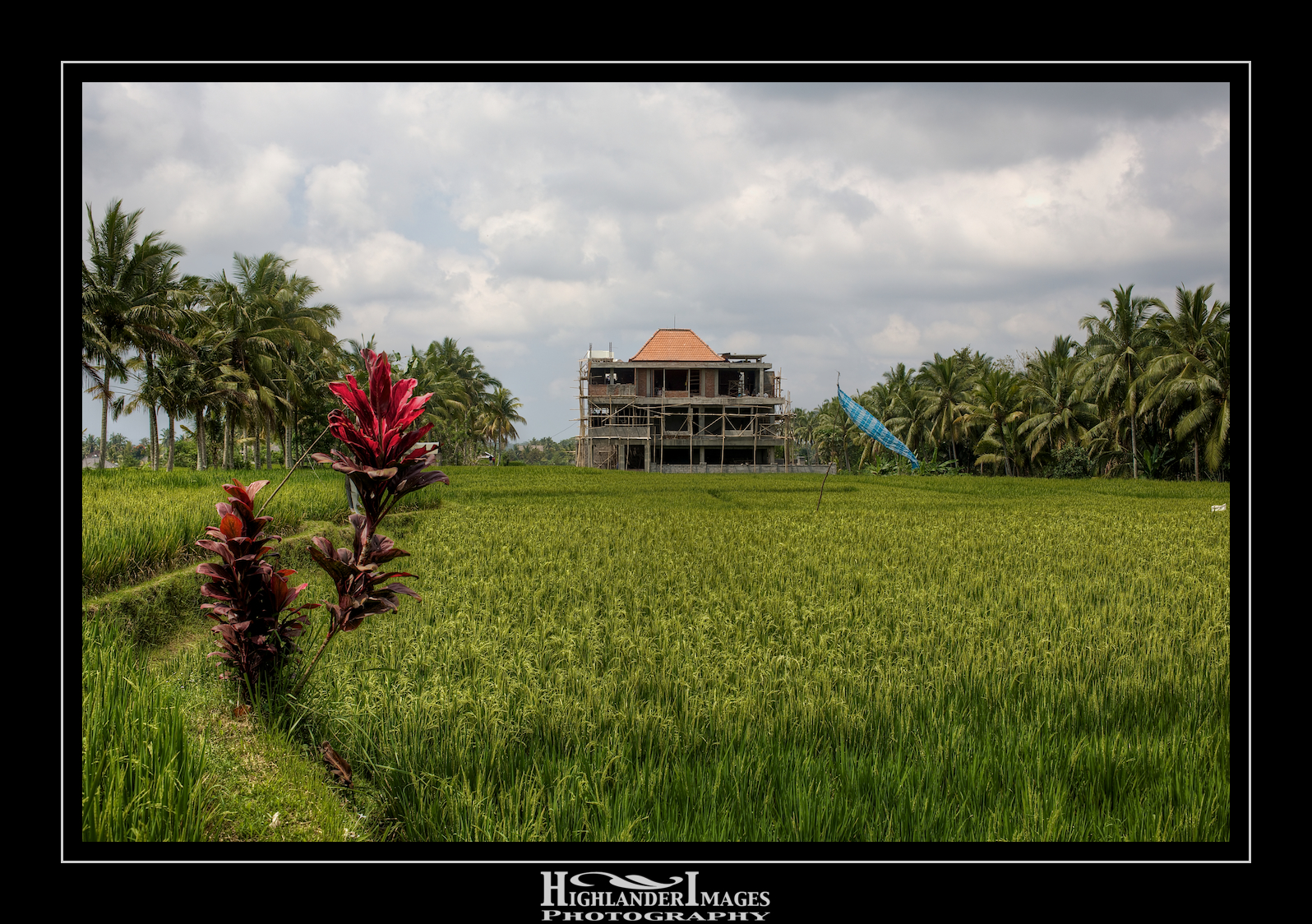
This is  a very typical rural scene in the outskirts of Ubud, Bali, Indonesia. These stepped padi fields are very common and you can watch the locals tend the rice using traditional methods. 

Rice, to the Balinese, is more than just the staple food; it is an integral part of the Balinese culture. The rituals of the cycle of planting, maintaining, irrigating, and harvesting rice enrich the cultural life of Bali beyond a single staple can ever hope to do. At the beginning of planting time, after the water buffalloes walk the rice fields several times to prepare them, ceremonies are held to carry the young stems of rice that have been nurtured in a special nursery. On each section of the rice fields, the corner nearest to Gunung Agung will receive the honor to be the first place to receive the young stems of rice. 
The water level in each section is perfect; little streams of water effortlessly flow from the highest section up on top of the hill to the very bottom section. The planning and responsiblity of the irrigation and planting schedule are arranged through subak, a Balinese system that ties together rice cultivation with its water temple system. Historical evidence dates this system to around the 11th century, yet the yield per acre of a Balinese rice field is about the highest in the world!
Before planting, throughout growing time, at harvesting, ceremonies are held and offerings are presented to Dewi Sri, the goddess of rice. In the middle of rice fields far from the village, you often find little shrines with netaly presented flowers, fruit, and offerings for Dewi Sri.

Tuesday, November 16, 2010

Paddy Workers

These two lovely ladies were working in the rice paddy fields on the outskirts of Ubud when we walked by. The colourful batik costume of the seated lady stood out in contrast to all the greens of the surrounding grass and jungle. But it was their serene smiles that really shone out so maybe something to be said for the simple Balinese life that we can all learn from.

Monday, November 15, 2010

The Fruit Seller

A colourful array of local fruits being sold in the local market in Ubud, Bali, Indonesia. This was midday on a very hot day so the lighting conditions were difficult. By ducking under the awning over the stall I managed to capture this image with the light dappling through the straw roof onto the lady's outfit.

Tuesday, July 06, 2010

Balinese Farmer

In the rice paddy fields on the outskirts of Ubud in Bali I came across this wonderful farmer who spoke fluent English and was so enthusiastic about telling me about his rice paddies and his prize cow which he then insisted on showing me. I think the demeanor and delightful character of these Balinese people is hard to match anywhere and makes me think I must go back there again soon.

Friday, August 07, 2009

Balinese Dance

In Bali there are various categories of dance; barong, pendet, baris, topeng legong, and kecak including epic performances such as the Mahabharat and Ramayana.These Balinese dances portray stories from Hindu epics but with heavy Balinese influence.


Legong Kraton


In legends, Legong is the heavenly dance of divine nymphs. Of all classical Balinese dances, it remains the quintessence of femininity and grace. Girls from the age of five aspire to be selected to represent the community as Legong dancers.
Connoisseurs hold the dance in highest esteem and spend hours discussing the merits of various Legong groups. The most popular of Legongs is the Legong Kraton, Legong of the palace. Formerly, the dance was patronized by local rajas and held in e puri, residence of the royal family of the village. Dancers were recruited from the aptest and prettiest children. Today, the trained dancers are still very young; a girl of fourteen approaches the age of retirement as a Legong performer.
The highly stylized Legong Kraton enacts a drama of a most purified and abstract kind. The story is performed by three dancers: the condong, a female attendant of the court, and two identically dressed legongs (dancers),who adopt the roles of royal persons. Originally, a storyteller sat with the orchestra and chanted the narrative, but even this has been refined away in many Legongs. Only the suggestive themes of the magnificent gamelan gong (the full Balinese orchestra) and the minds of the audience conjure up imaginary changes of scene in the underlying play of Legong Kraton.
The story derives from the history of East Java in the 12th and 13th centuries: when on a journey the King of Lasem finds the maiden Rangkesari lost in the forest. He takes her home and locks her in a house of stone. Rangkesari's brother, the Prince of Daha, learns of her captivity and threatens war unless she is set free.


Ramayana
The story of the great Hindu epic, Ramayana,  greatly inspires the Balinese and their version differs from the Indian version. Many of their dances are based on this great story which is often depicted in a ballet. The full story is massive, and told only in episodes.


The most popular episode tells the story of Prince Rama, his wife Sita, and his brother Laksmana. They are banished from their kingdom and wandering through the forest. One day, while hunting for deer, they are tricked by the evil Rawana, who kidnaps Sita. With the help of the mythical Garuda, and Hanuman - a white monkey general, Prince Rama eventually saves his wife.


Everyone in Bali loves this story, and even at tourist shows, there are sure to be Balinese in attendance.