- a dam and collectively owned irrigation canals
- the rice terraces within clearly defined subak boundaries
- all the farmers who cultivate land within the subak boundaries
- a religious unit consisting of rituals on the individual level, the subak level, and the inter- subak level
- a legal unit, with a clearly defined set of rules that regulates the rights and duties of its members
Showing posts with label ecosystem. Show all posts
Friday, October 05, 2012
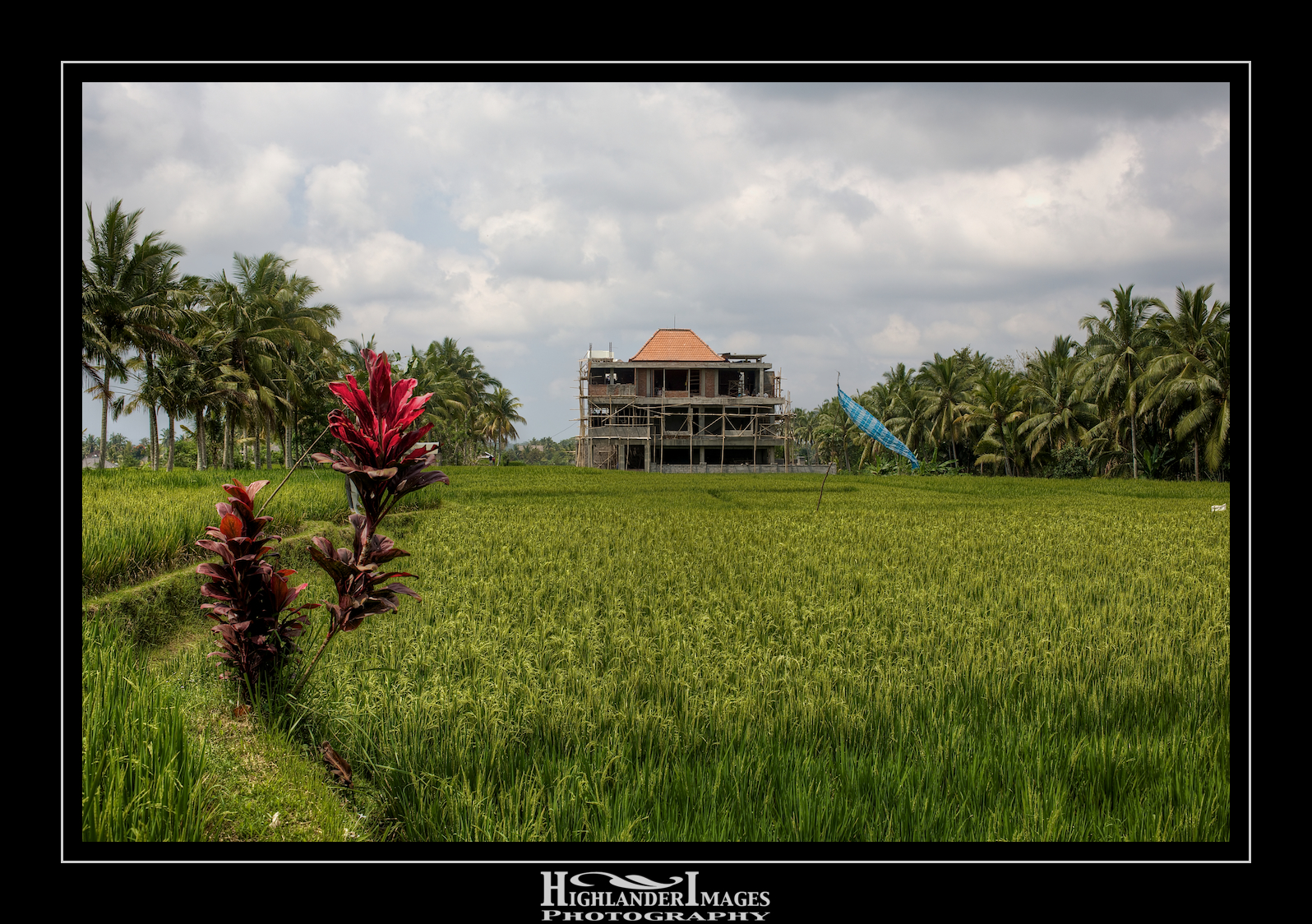
Rice Bowl of Bali
With the rich and fertile volcanic soils and plentiful water, rice cultivation in Bali is of key agricultural importance and is well known worldwide for its unique and efficient use of irrigation water in the many terraced paddy fields. One of the fundamental backbones of this rice production is the subak. Subak is the name of water management or irrigation system for paddy fields in Bali. For Balinese, irrigation is not simply providing water for the rice plants, but water is used to construct a complex, artificial ecosystem. Paddy fields in Bali are built around water temples and the allocation of water is supervised by a priest.
The subak comprises many individual parts:
With the growth of tourism and urbanisation in Bali the subak is coming under increasing pressure. with farmers tempted to sell their rice fields and move into other more lucrative jobs such as construction or tourism. The highly productive arable land is unfortunately getting lost at an accelerated rate due to excessive building and tourist activities.
Labels:
agriculture,
arable,
Bali,
bowl,
cultivation,
dam,
ecosystem,
field,
Indonesia,
irrigation,
paddy,
religious,
rice,
soil,
subak,
tourism,
Ubud,
urbanisation,
volcanic,
water
Monday, April 18, 2011
Deforestation
This is a view of Bukit Tagar in Malaysia where rampant deforestation is ongoing. An earlier post I made some time back also highlighted this issue. The timber business in Malaysia is big business and combined with the ongoing corruption and lack of governmental controls or enforcement means that this problem persists.
Labels:
Bukit Tagar,
corruption,
damage,
deforestation,
ecosystem,
Malaysia,
timber
Monday, December 14, 2009
Deforestation Dilemma
Deforestation is a major issue worldwide but particularly so in sensitive environments like the swamp peat forests of Asia. A peat swamp forest is an extremely diverse ecosystem with about 500 species of trees which can grow up to around 30m tall. Some are valuable timber species and there are also some useful medicinal plants. From a conservation point of view these species are very important so it is an extremely large impact when this forest is cleared and burnt. All forest fires in the tropics are human related as naturally there is no fire in the system, hence the reason that the layer of plant material has built up to a thickness of around 10m.
A peat swamp forest acts like a sponge, absorbing rain and river water, helps control floods during the rainy season and releases much needed water during the dry season. It is an ecologically important ecosystem for the regulation of climate with the trees absorbing carbon dioxide from the atmosphere and storing this in a thick layer of un-decomposed plant material or peat. The peat in this forest is up to 10m thick, has accumulated over the last 10,000 years and is one of the most important global stores of carbon therefore regulating the levels of carbon dioxide in the atmosphere.
Many of these peat swamp forest are illegally cleared and burnt for agricultural purposes. Regeneration of a damaged peat swamp forest will not be easy; after all, it took some 10,000 years for the peat to form. While rehabilitation of peat swamps has been inadequately studied it may take some 50 years for a damaged forest to re-establish itself; that is, assuming that its hydrology was not significantly spoiled.
Labels:
deforestation,
ecosystem,
environmental,
forest,
illegal,
logging,
peat,
rehabilitation,
swamp,
timber
Subscribe to:
Posts (Atom)