Showing posts with label Sichuan. Show all posts

Saturday, November 30, 2013

Mount Emei - Sacred Mountain


Mount Emei (Chinese: 峨嵋山; pinyin: Éméi Shān; Wade–Giles: O2-mei2 Shan1, pronounced [ɤ̌měɪ̯ ʂán]) is a mountain in Sichuan province, China. Its name is usually written as "峨眉山" and occasionally "峩嵋山" or "峩眉山" but all three are translated as Mount Emei or Mount Emeishan (a linguistic tautology). The word 峨 can mean "high" or "lofty", but the mountain's name is merely a toponym that carries no additional meaning.
Orographically, Mt. Emei sits at the western rim of the Sichuan Basin. The mountains west of it are known as Daxiangling. A large surrounding area of countryside is geologically known as the Permian Emeishan Large Igneous Province, a large igneous province generated by the Emeishan Traps volcanic eruptions during the Permian Period. At 3,099 metres (10,167 ft), Mt. Emei is the highest of the Four Sacred Buddhist Mountains of China.
Administratively, Mt. Emei is located near the county-level city of the same name (Emeishan City), which is in turn part of the prefecture-level city of Leshan. It was made a UNESCO World Heritage Site in 1996.


Indigenous animals

Visitors to Mount Emei will likely see dozens of Tibetan Macaques who can often be viewed taking food from tourists. Local merchants sell nuts for tourists to feed the monkeys. Some monkeys may be seen eating human food such as potato chips and even drinking soda from discarded bottles.
The Emei Shan Liocichla, a passerine bird, as well as the Emei Music Frog, a vocal frog, are named after the site.

Flora
Mount Emei is known for its high level of endemism and approximately 200 plant species in various plant families have been described from this mountain.


Sacred mountain

Mount Emei is one of the Four Sacred Buddhist Mountains of China, and is traditionally regarded as the bodhimaṇḍa, or place of enlightenment, of the bodhisattva Samantabhadra. Samantabhadra is known in Mandarin as Pǔxián Púsà (普賢菩薩).
16th and 17th century sources allude to the practice of martial arts in the monasteries of Mount Emei made the earliest extant reference to the Shaolin Monastery as Chinese boxing's place of origin.
Buddhist architecture on Emei
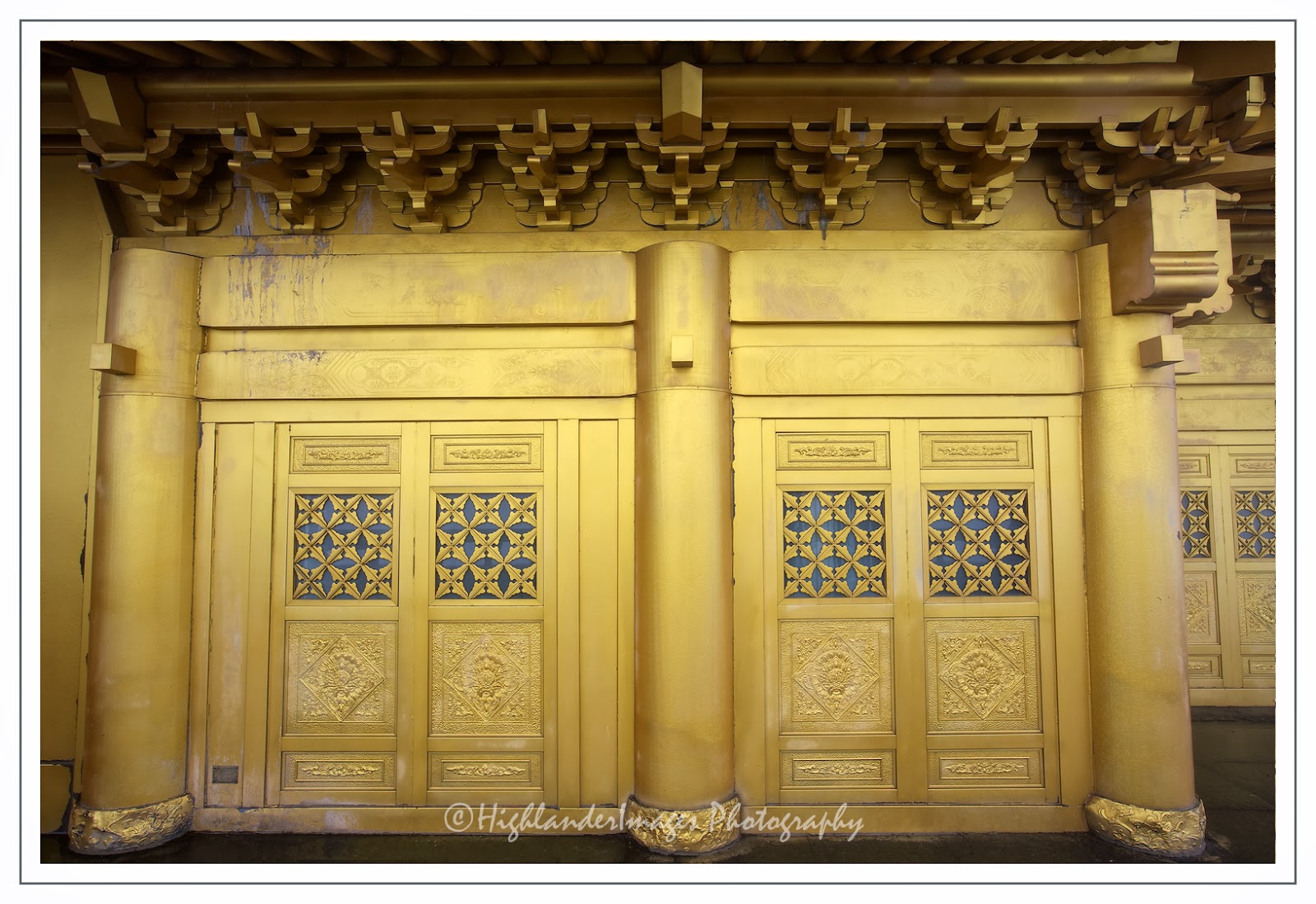
This is the location of the first Buddhist temple built in China in the 1st century CE. The site has seventy-six Buddhist monasteries of the Ming and Qing period, most of them located near the mountain top. The monasteries demonstrate a flexible architectural style that adapts to the landscape. Some, such as the halls of Baoguosi, are built on terraces of varying levels, while others, including the structures of Leiyinsi, are on raised stilts. Here the fixed plans of Buddhist monasteries of earlier periods were modified or ignored in order to make full use of the natural scenery. The buildings of Qingyinge are laid out in an irregular plot on the narrow piece of land between the Black Dragon River and the White Dragon River. The site is large and the winding foot path is 50 km (31 mi), taking several days to walk.
Cable cars ease the ascent to the two temples at Jinding (3,077 m), an hour's hike from the mountain's peak. 
Great spectacles of Mount Emei include the sunrise and Clouds Sea seen from the Golden Summit of the mountain.
The sunrise is very varied, but optimally begins with the ground and sky being in the same dark purple, soon showing rosy clouds, followed by a bright purple arc and then a semicircle where the sun is coming up.
The Clouds Sea includes several cloud phenomena, e.g. clouds appearing in the sky above, in addition to the regular clouds beneath.



Climate


The summit of Mount Emei has an alpine subarctic climate, with long, cold (but not severely so) winters, and short, cool summers. The monthly 24-hour average temperature ranges from −5.7 °C (21.7 °F) in January to 11.6 °C (52.9 °F), and the annual mean is 3.07 °C (37.5 °F). Precipitation is common year-round (occurring on more than 250 days), but due to the influence of the monsoon, rainfall is especially heavy in summer, and more than 70% of the annual total occurs from June to September.


Sichuan Opera

Sichuanese opera (Chinese: 川劇; Sichuanese Pinyin: Cuan1ju4; pinyin: Chuānjù) is a type of Chinese opera originating in China's Sichuan province around 1700. Today's Sichuan opera is a relatively recent synthesis of 5 historic melodic styles. Regionally Chengdu remains to be the main home of Sichuanese opera, while other influential locales include Chongqing, Guizhou, Yunnan, Hubei and Taiwan.


History

Initially there were 5 distinct opera styles. The history of each style varies greatly.
At least one of the Chinese operatic styles began as early as the Three Kingdoms period with some form of Canjun opera. During the Tang dynasty, a band of five came about in Chengdu. In the Song dynasty, the opera developed into zaju. In the Ming dynasty, artists performed the skill in Jinling (modern-day Nanjing). During the reign of Yongzheng and Qianlong emperor in the Qing dynasty, in the Huabu areas, Kunqu, Yiyang, Bangzi and Pihuang melody merged with local languages, folk customs, ditties, yang-kos and Lantern theatre (Dengdiao) in Sichuan.
During the early 20th century, a revival movement began to reform the art. The best known reformer was Kang Zhilin, who led the Sanqinq (Three Celebrations) Company. This company was one of the most notable opera troupes, established in 1912, and combined the 5 styles into a single opera on the same stage. Each style retained its own music. One of the classic skills devised by Kang Zhilin included a high kick that leaves a "third eye" in the middle of the forehead. This has remained one of Sichuanese opera's trademark moves.
During the Cultural Revolution, the art form suffered somewhat. But it continued to flourish afterwards, especially since the 1978 Chinese economic reform.


Performance

Overall the art form is well known for its singing, which is less constrained than that of the more popular Beijing opera form. Sichuan opera is more like a play than other forms of Chinese opera, and the acting is highly polished. The music accompanying Sichuanese opera utilizes a small gong and an instrument called a Muqin, which is similar to the Erhu.
The traditional formula is quite systematic with a combination of stunts like face-changing, tihuiyan, sword-hiding, fire-spitting and beard-changing with the plot and different characters.


5 styles

Gaoqiang (高/高)
Kunqiang (崑/昆)
Huqing voice (鬍/胡)
Tanxi (彈/彈)
Dengdiao / Dengxi / Lantern theatre (燈/灯)

Costumes

Depending on the style, face paint is also limited compared to other related forms. Jing characters do not appear, and the only painted face characters are those with a small white patch in the middle of the face, which indicates a slightly evil character. The face paint colors are traditionally limited to black, red, white and grey.


Bian lian

Bian Lian (simplified Chinese: 变脸; traditional Chinese: 變臉; pinyin: Biàn Liǎn; literally "Face-Changing") is an ancient Chinese dramatic art that is part of the more general Sichuan opera. Performers wear brightly colored costumes and move to quick, dramatic music. They also wear vividly colored masks, typically depicting well known characters from the opera, which they change from one face to another almost instantaneously with the swipe of a fan, a movement of the head, or wave of the hand.


Face-changing, or "biàn liǎn" in Chinese, is an important sub-genre of Chinese Sichuan opera. The secret for how to accomplish it has been passed down from one generation to the next within families. Traditionally only males were permitted to learn Bian Lian, the theory being that women do not stay within the family and would marry out, increasing the risk the secret would be passed to another family. Controversially, a Malaysian Chinese woman named Candy Chong has become a popular performer after learning Bian Lian from her father. Another female performer is Du Li Min, who teaches a workshop in Kuala Lumpur with her Husband Bian Jiang.
In a 2006 interview, Sichuan Opera performer Wang Daozheng said the secret of Bian Lian leaked out during the 1986 visit of a Sichuan Opera troupe to Japan. Wang laments the leak of this Chinese traditional secret performance art and is concerned that non-Chinese performers in Japan, Singapore, South Korea and other countries are not well-trained. Wang argues that Bian Lian is one of the traditional arts protected by Chinese secrecy laws but officials of the Ministry of Culture of the People's Republic of China have stated that this is not true.
In 2003, Hong Kong pop star Andy Lau allegedly offered to pay Bian Lian master Peng Denghuai 3,000,000 yuan (ca. US$360,000) in order to learn the techniques. Although Lau did learn the techniques from Peng, both deny any money changed hands. Knowing the secret does not make it easy and thus far, Andy Lau has only learned how the masks are changed so quickly, but has not yet mastered the technique.
Historically, Bian Lian had rarely been seen outside of China because non-Chinese were not permitted to learn the art form, but since the mid-2000s it has been performed occasionally in international mass media and at Chinese themed events. Juliana Chen performed on The World's Greatest Magic television special with a brief black-light performance of Bian Lian. Michael Stroud, (as The Magique Bazaar) performed Bian Lian on America's Got Talent. Bian Lian was also featured on Penn & Teller's Magic and Mystery Tour. In San Francisco, Bian Lian was featured at the China Town Autumn Moon Festival 2010-2012  and at the Miss National Asia 2011 and 2012 beauty pageants.
Since the cultural basis of the opera are not well known outside of China, international performers have been making efforts to inform and increase the entertainment value for Westerners.

Thursday, November 28, 2013

Baoguo Temple


Close to the foot of Mount Emei, Emeishan, Sichuan province China is an old monastery known as Baoguo Temple

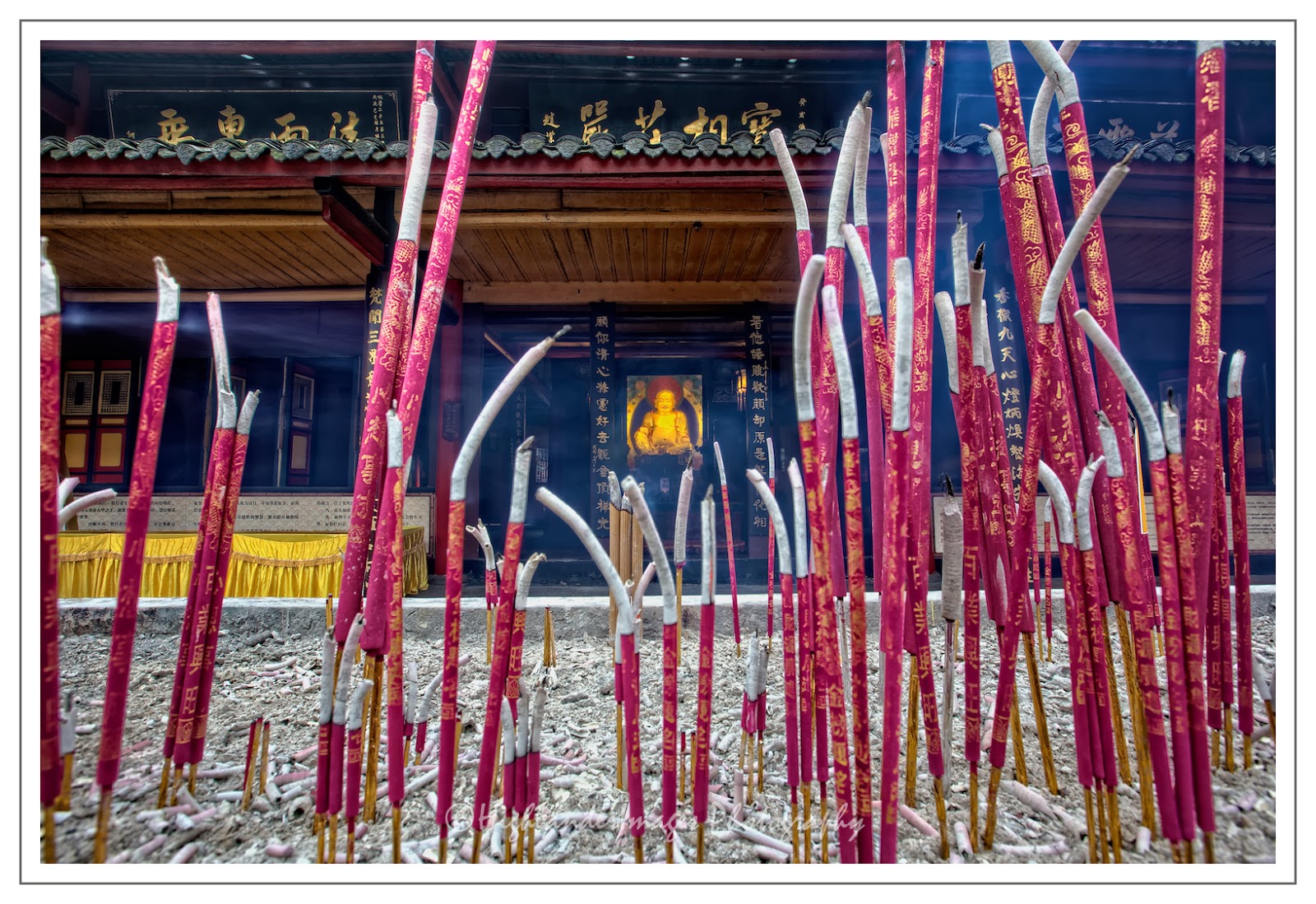
Baoguo Temple was originally called Huizong Hall when it was built during the Ming Dynasty (1368 to 1644), and was later renamed Baoguo Temple (报国寺) by Kangxi Emperor (康熙皇帝) in the Qing Dynasty (1644 to 1912). To this day, in fact, you can still find the horizontal nameplate on the mountain gate with "The Bao Guo Temple" personally written by Kangxi. Of all the various temples on Mount Emei today, Baoguo Temple is the the oldest and serves as the center for many Buddhist festivals every year. A magnet for devout Buddhists and interested travelers, Baoguo Temple is the first structure that visitors happen upon and is considered the gate to Mount Emei.


Taking advantage of the Mount Emei's geography, Baoguo Temple was built with four buildings leaning towards the mountain face, each one taller than the next. In addition, to the exquisite temple structures, the china Buddha sculpture under the sutra depository sits with a graceful posture and the expert craftsmanship of the sculpture can be traced back to the Ming Dynasty!


In the front hall is a 7 meter (23 feet) high purple copper tower, which has fourteen levels and more than 4,700 Buddhist figures cast on its body. Walking through the gate of the Baoguo Temple, you’ll find a newly built pavilion by where the large Ming Dynasty bell hangs.  The bell is 2.3 meters (7.5 feet) high and weighs more than 10 tons (22,040 pounds). Upon being struck, it can be heard far and wide across the tranquil mountain landscape, creating a peaceful, cleansing Buddhist atmosphere.