Showing posts with label Ipoh. Show all posts

Tuesday, August 27, 2013

Banjaran Hot Spring Spa …. and A Wine Cellar to Mesmerise You


Nestled in the limestone hills surrounding Ipoh lies a delightful sanctuary where you can relax and pamper yourself. The Banjaran Hot Spring Spa is a 5-star retreat sanctuary consisting of 25 luxury villas offering holistic wellness and spa experiences, unequalled hospitality and distinctive Asian grace. Strategically located 15 minutes from the city of Ipoh, it is just 2 hours drive from Kuala Lumpur and 1.5 hours drive from Penang. It is situated on a 16.59 acre valley fringing a cluster of towering limestone hills and features an amalgamation of natural caves, pristine jungle, waterfalls and geothermal hot springs.


Geology

The thermal springs at The Banjaran are a natural and relatively rare phenomenon. Groundwater flows naturally at the base of the hills at a temperature of 65 to 70°, at a rate of about 3 millions liters per day (approximately 2,000 liters/minute). The water comes from a deep underground reservoir fed by rainwater that has slowly percolated downwards through the limestone hills and the underlying granite. As it makes its way down through the rocks, the water picks up minerals and dissolved ions.The water also warms up on its way downwards. Because of the heat radiation from the earth’s mantle, temperature increases with depth at a rate of about 3 to 4° per 100 meters, referred to as the geothermal gradient. Taking into consideration an average surface temperature of 25° and the fact that the water would have cooled down by about 10° on its way back upwards, groundwater would have reached a temperature of 80° at about 1,500 meters below the surface. Buoyed by dissolved gases and the higher pressure in the subsurface, groundwater eventually travels back to the surface as it encounters a fault or fractures in the rocks and comes out bubbling as a hot spring at the surface. Hot water is captured at The Banjaran to feed the steam room, a natural sauna, to fill the hot lake and to warm up the pool. The amount of carbon dioxide not produced by capturing and using naturally hot water at The Banjaran is roughly equivalent to the carbon sequestered by about 110,000 tree seedlings grown for 10 years.


Wining & Dining

At The Banjaran, only the freshest organic fruits and vegetables are used. The Pomelo restaurant serves the freshest premium seafood, meat and poultry that richly enhance the overall flavour and nutritional value of each meal.


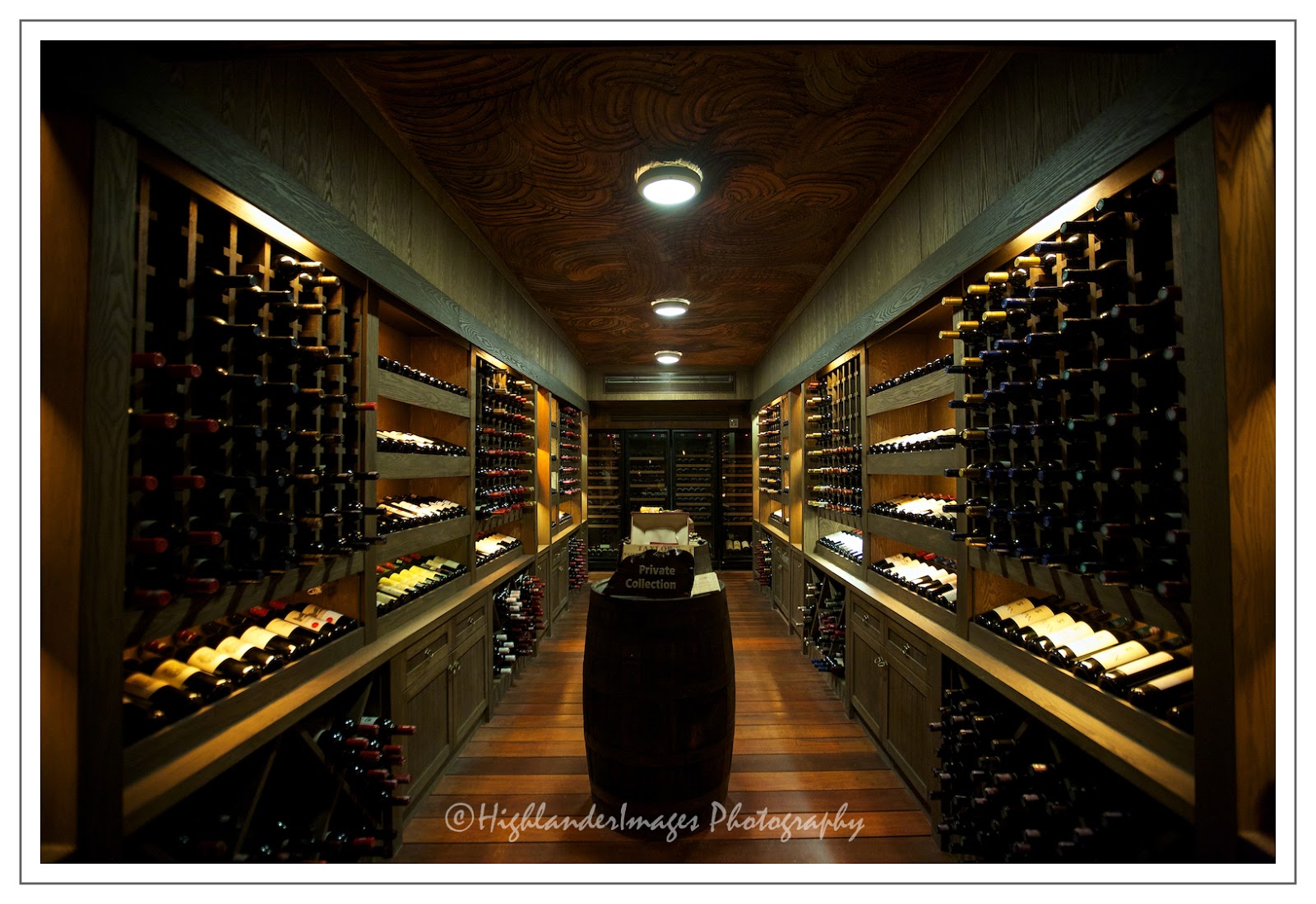
Private Wine Cellar

Probably one of the most unique and mesmerising places at Banjaran is the private wine cellar which is located in a large 280 million year palaeozoic cave in one of the nearby limestone hills. Sealed with a large door and grill the entire cave has been air-conditioned and fitted with lights with piped music to create an incredible area for storing wine, hosting dinner parties or meeting at the bar …. all located within the cave. I use the word mesmerise as this was the exact phrase used by one of the waiters who guided us to this feature …. and he was not wrong! The private wine cellar belongs to Tan Sri Jeffrey Cheah, the founder and chairman of the Sunway Group but is open in the evening for drinks or you can book dinner here.




Sunday, August 25, 2013

A Weekend of Indulgence


We returned once again to Indulgence Restaurant & Living in Ipoh for a short weekend break and some serious self indulgence in the excellent cuisine from chef Julie Song. The food was, as ever, excellent and accompanied by the great service of her well trained team it was a memorable experience. The boutique rooms at Indulgence are all very comfortable, each one decorated in a theme or style. This time we were lucky to enjoy the wonderful Roccoco style of the Qatrynka suite which as you can see from the photographs was beautifully furnished and decorated. The bathroom with its brightly coloured hand-painted murals on the walls and the tasteful fittings was both stunning as well as spacious.


Sunday, February 24, 2013

Tin Dredge TT5


Tin mining is one of Malaysia’s oldest and most successful industries. In the 1600s, this industry started to thrive in Kedah, Perak and Selangor. Over the centuries, tin was extracted in huge quantities from both open cast and deeper mines. Dredges were commonly used to extract the tin. Today, there are only about three old dredges left in the country, and this one at Chenderoh, near Tanjong Tualang, Perak, has been preserved. In Feb 2008, it was opened to the public for tours.


The first tin dredge was introduced in Malaysia in 1913 by Malayan Tin Dredging Ltd and started operations in Batu Gajah, Perak. It was steam-powered, using 280-litre buckets that could dig to a depth of 15 metres. The company acquired four dredges and by 1924 was the largest tin dredging company in the world. In 1926, a sister company, Southern Malayan Tin Dredging Ltd was formed, and operated a further five tin dredges between Batu Gajah and Tanjong Tualang.


This fifth dredge, the Tanjung Tualang Dredge No.5 (TT5) was designed and built by F.W. Payne in 1938 in England. It is located approximately 9 kilometres south of Batu Gajah on the Tanjong Tualang road. The dredge was in operation for 44 years, until August 1982, when a drop in tin prices made the dredge uneconomicaly viable.


The pontoon of the dredge is 75m long, 20m wide, and is three storeys high. The total weight of the dredge is 4,500 tonnes. It is essentially a floating factory where buckets on a chain scoop earth deep from the pond. These buckets were then transported up to an area high in the body of the dredge. It was moved by means of a 1.5km long cable, worked from the control area.
The dredge would run on diesel generated electricity 24 hours a day, in two shifts with approximately 20 workers per shift. The conveyor buckets would dig the tin-bearing soil and transport it upwards, emptying the contents into an oscillating drum. The tin would then be extracted through a system of jigs and screens, leaving the excess material to be disposed of via a system of chutes at the back of the dredge.


During the heyday of the tin mining industry, 40 dredges were operated in Perak, with a record of 105 working in 1929 in the whole of the peninsula. This particular dredge stopped work around 1983 after more than 40 years of service.


The TT5 tin dredge is currently owned by the Perak State Government. It is of enormous heritage value as the last remaining tin dredge of its kind in Malaysia. A committee was formed at the end of 2010 to save, preserve and enhance TT5 tin dredge so that it could showcase Malaysia's tin mining past through tourism and education. This has resulted in a "Save the Dredge" campaign in order to raise funds for restoration of the dredge. The TT5 tin dredge is open from 8:30am to 7pm daily, including weekends and public holidays with an entrance fee of RM10.