Showing posts with label Canada. Show all posts

Tuesday, October 21, 2014

Butchart Gardens - Brentwood Bay, British Columbia


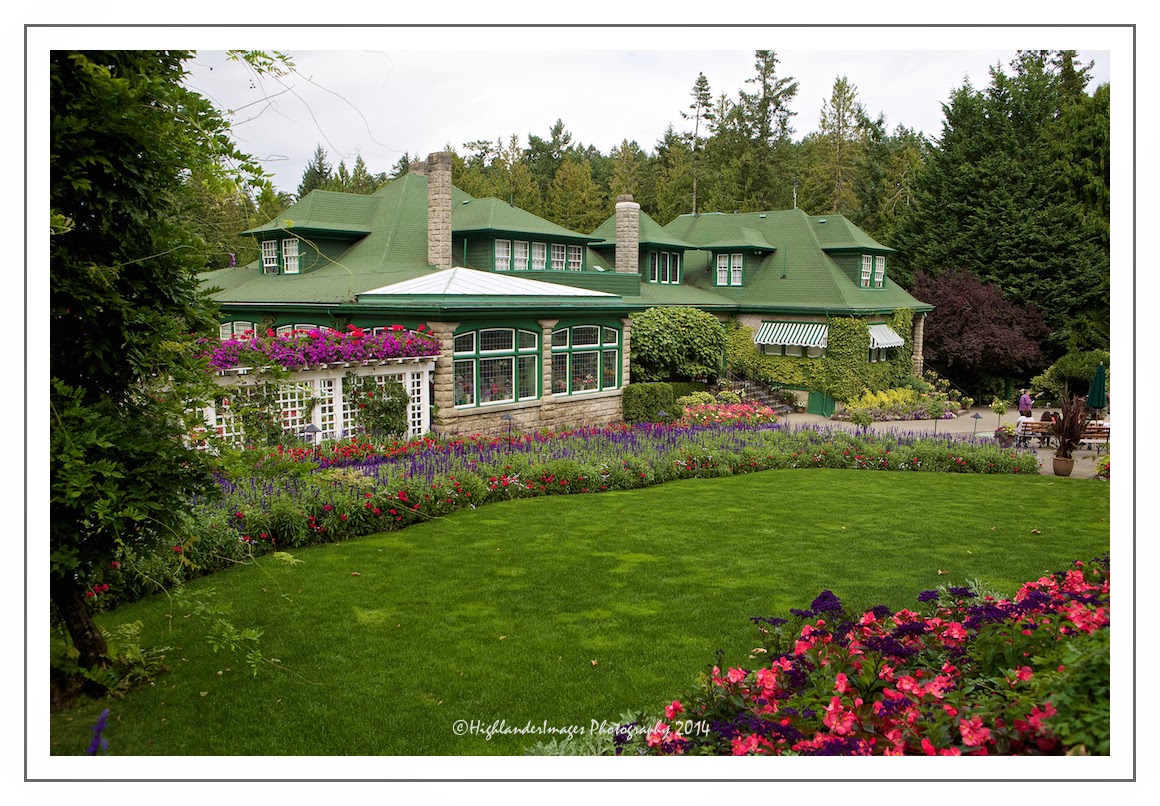
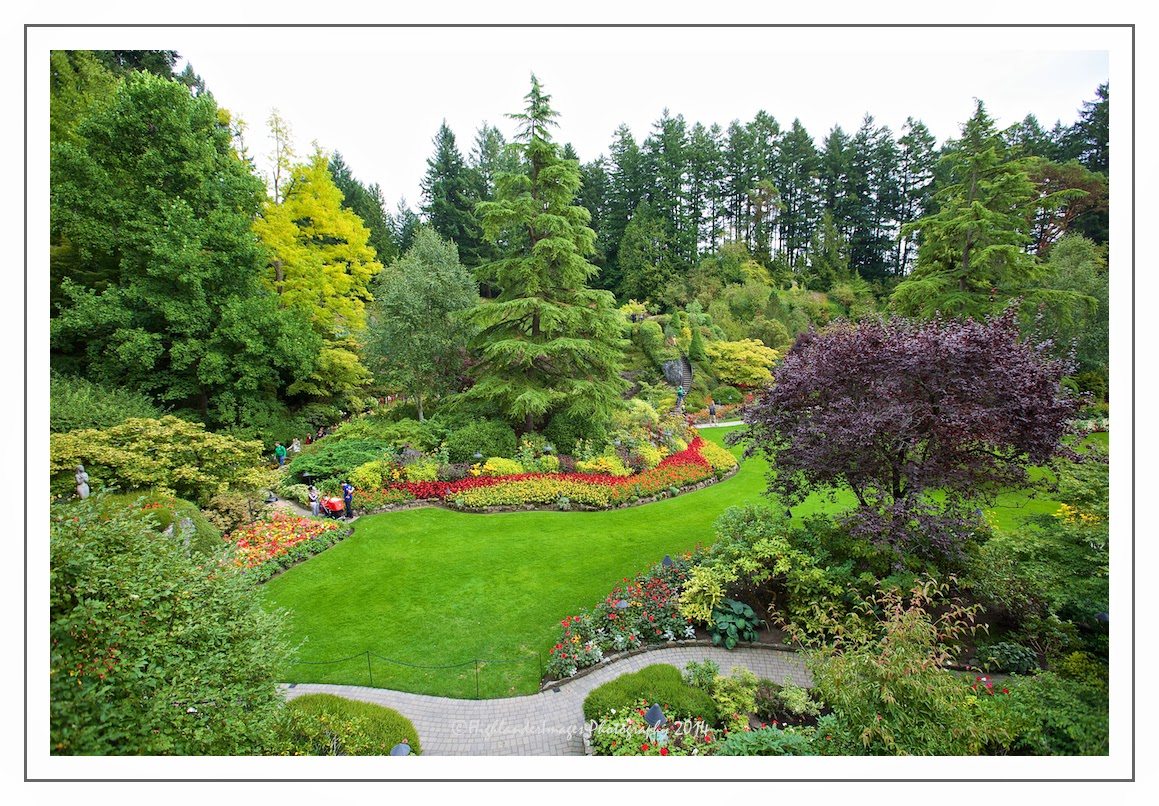
The Butchart Gardens is a group of floral display gardens in Brentwood Bay, British Columbia, Canada, located near Victoria on Vancouver Island. The gardens receive close to a million visitors each year. The gardens have been designated a National Historic Site of Canada due to their international renown.


Robert Pim Butchart (1856–1943) began manufacturing Portland cement in 1888 near his birthplace of Owen Sound, Ontario, Canada. He and his wife Jennie Butchart (1866–1950) came to the west coast of Canada because of rich limestone deposits necessary for cement production.

In 1904, they established their home near his quarry on Tod Inlet at the base of the Saanich Peninsula on Vancouver Island.

As Mr. Butchart exhausted limestone deposits, his enterprising wife Jennie, made plans to create something of beauty in the gigantic exhausted pit. From farmland nearby, she had tonnes of top soil brought in by horse and cart and used it to line the floor of the abandoned quarry. Little by little, the quarry blossomed into the spectacular Sunken Garden.


They named their home "Benvenuto" ("welcome" in Italian), and began to receive visitors to their gardens. In 1926, they replaced their tennis courts with an Italian garden and in 1929 they replaced their kitchen vegetable garden with a large rose garden to the design of Butler Sturtevant of Seattle. Samuel Maclure, who was consultant to the Butchart Gardens, reflected the aesthetic of the English Arts and Crafts Movement.


In 1939, the Butcharts gave the Gardens to their grandson Ian Ross (1918–1997) on his 21st birthday. Ross was involved in the operation and promotion of the gardens until his death 58 years later.

In 1953, miles of underground wiring was laid to provide night illumination, to mark the 50th anniversary of The Gardens. In 1964, the ever-changing Ross Fountain was installed in the lower reservoir to celebrate the 60th anniversary. In 1994, the Canadian Heraldic Authority granted a coat of arms to the Butchart Gardens. In 2004, two 30-foot (9.1 m) totem poles were installed to mark the 100th anniversary, and The Gardens were designated as a national historic site.


Ownership of The Gardens remains within the Butchart family; the owner and managing director since 2001 is the Butcharts' great-granddaughter Robin-Lee Clarke.

In 1982 the Butchart Gardens was used as the inspiration for the gardens at the Canadian pavilion opened at Epcot Centre in Orlando Florida.

In December, 2009 the Children's Pavilion and the Rose Carousel were opened. The menagerie includes thirty animals ranging from bears, to horses, to ostriches, to zebras and mirrors the world from which The Gardens draws its visitors. The designs were hand picked by the owner, in consultation with an artist from North Carolina. The carvings were done by some of the few remaining carvers of carousel art. Each animal is carved from basswood and took many months to complete. There are also two chariots able to accommodate disabled persons.


Sunday, October 05, 2014

Vancouver - Top 10 Liveable City


Vancouver, officially the City of Vancouver, is a coastal seaport city on the mainland of British Columbia, Canada. The 2011 census recorded 603,502 people in the city, making it the eighth largest Canadian municipality. The Greater Vancouver area of around 2.4 million inhabitants is the third most populous metropolitan area in the country and the most populous in Western Canada. Vancouver is one of the most ethnically and linguistically diverse cities in Canada; 52% of its residents have a first language other than English.

The City of Vancouver encompasses a land area of about 114 square kilometres, giving it a population density of about 5,249 people per square kilometre (13,590 per square mile). Vancouver is the most densely populated Canadian municipality, and the fourth most densely populated city over 250,000 residents in North America, behind New York City, San Francisco, and Mexico City.


Vancouver was our starting point of a month long trip to Canada and USA and was our embarkation point for our 12 day Alaskan cruise up the Inside Passage. Arriving here after a 27 hour haul from Malaysia we had 3 days to enjoy this beautiful city before our cruise departed. 


Coal Harbour was a short walk from our hotel and this gave us our first impressions of this city with a beautiful harbour surrounded by modern apartments, walkways along the waterfront with people out walking, jogging and cycling and the float planes taking off from the water taking tourists to the scenic areas around Vancouver. 


The city was clean organized and had a wonderful racial mix with a high percentage of Asians. The street our hotel was on was full of Asian restaurants and it hardly felt like we had travelled half way round the world. 


Stanley Park is a 1,001-acre public park that borders the downtown of Vancouver, Canada and is almost entirely surrounded by waters of the Pacific Ocean. It is one of the largest urban parks in North America.

The park has a long history and was one of the first areas to be explored in the city. The land was originally used by indigenous peoples for thousands of years before British Columbia was colonized by the British during the 1858 Fraser Canyon Gold Rush. For many years after colonization, the future park with its abundant resources would also be home to nonaboriginal settlers. The land was later turned into Vancouver's first park when the city incorporated in 1886. It was named after Lord Stanley, a British politician who had recently been appointed governor general.


The Lions Gate Bridge, opened in 1938, officially known as the First Narrows Bridge, is a suspension bridge that crosses the first narrows of Burrard Inlet and connects the City of Vancouver, British Columbia, to the North Shore municipalities of the District of North Vancouver, the City of North Vancouver, and West Vancouver. The term "Lions Gate" refers to The Lions, a pair of mountain peaks north of Vancouver. Northbound traffic on the bridge heads in their general direction. A pair of cast concrete lions, designed by sculptor Charles Marega, were placed on either side of the south approach to the bridge in January, 1939.


Granville Island is a peninsula and shopping district in Vancouver, British Columbia, Canada. It is located across False Creek from Downtown Vancouver, under the south end of the Granville Street Bridge. The peninsula was once an industrial manufacturing area, but today it is now a hotspot for Vancouver tourism and entertainment. The area has received much acclaim in recent years for its buildings and shopping experience.


OSGEMEOS, famous Brazilian graffiti artists and twin brothers Gustavo and Otavio Pandolfo created a giant mural art project on Granville Island that transformed six concrete silos at Ocean Concrete to a colourful piece of public art.


Gastown is a national historic site in Vancouver, British Columbia, at the northeast end of Downtown adjacent to the Downtown Eastside. Its historical boundaries were the waterfront (now Water Street and the CPR tracks), Columbia Street, Hastings Street, and Cambie Street, which were the borders of the 1870 townsite survey, the proper name and postal address of which was Granville, B.I. ("Burrard Inlet"). The official boundary does not include most of Hastings Street except for the Woodward's and Dominion Buildings, and stretches east past Columbia St., to the laneway running parallel to the west side of Main Street.


Gastown's most famous (though nowhere near oldest) landmark is the steam-powered clock on the corner of Cambie and Water Street. Built to cover a steam grate, part of Vancouver's distributed steam-heating system, the clock was built as a way to harness the steam and to prevent street people from sleeping on the spot in cold weather. Its original design was faulty and it had to be powered by electricity after a breakdown. The steam mechanism was completely restored with the financial support of local businesses as it had become a major tourist attraction, and is promoted as a heritage feature although it is of modern invention. The steam used is low pressure downtown-wide steam heating network (from a plant adjacent to the Georgia Viaduct) that powers a miniature steam engine in its base, in turn driving a chain lift. The chain lift moves steel balls upward, where they are unloaded and roll to a descending chain. The weight of the balls on the descending chain drives a conventional pendulum clock escapement, geared to the hands on the four faces. The steam also powers the clock's sound production as whistles are used instead of bells to produce the Westminster "chime" and to signal the time.


Vancouver is consistently named as one of the top five worldwide cities for livability and quality of life, and the Economist Intelligence Unit acknowledged it as the first city to rank among the top-ten of the world's most liveable cities for five consecutive years. Vancouver has hosted many international conferences and events, including the 1954 British Empire and Commonwealth Games, UN Habitat I, Expo 86, and the World Police and Fire Games in 1989 and 2009. In 2014, following thirty years in California, Vancouver became the indefinite home of the annual TED conference. Canada will host the 2015 FIFA Women's World Cup, and several matches will be played in Vancouver, including the final at BC Place Stadium. The 2010 Winter Olympics and 2010 Winter Paralympics were held in Vancouver and nearby Whistler, a resort community 125 km (78 mi) north of the city.


It was soon time to leave this very impressive and liveable city and head off on our Alaskan cruise from the cruise terminal close to our hotel. Sailing out of Vancouver we got a wonderful view of the city and as we passed under the Lion's Gate Bridge at the south end of Stanley Park we had a final view of this great city.